


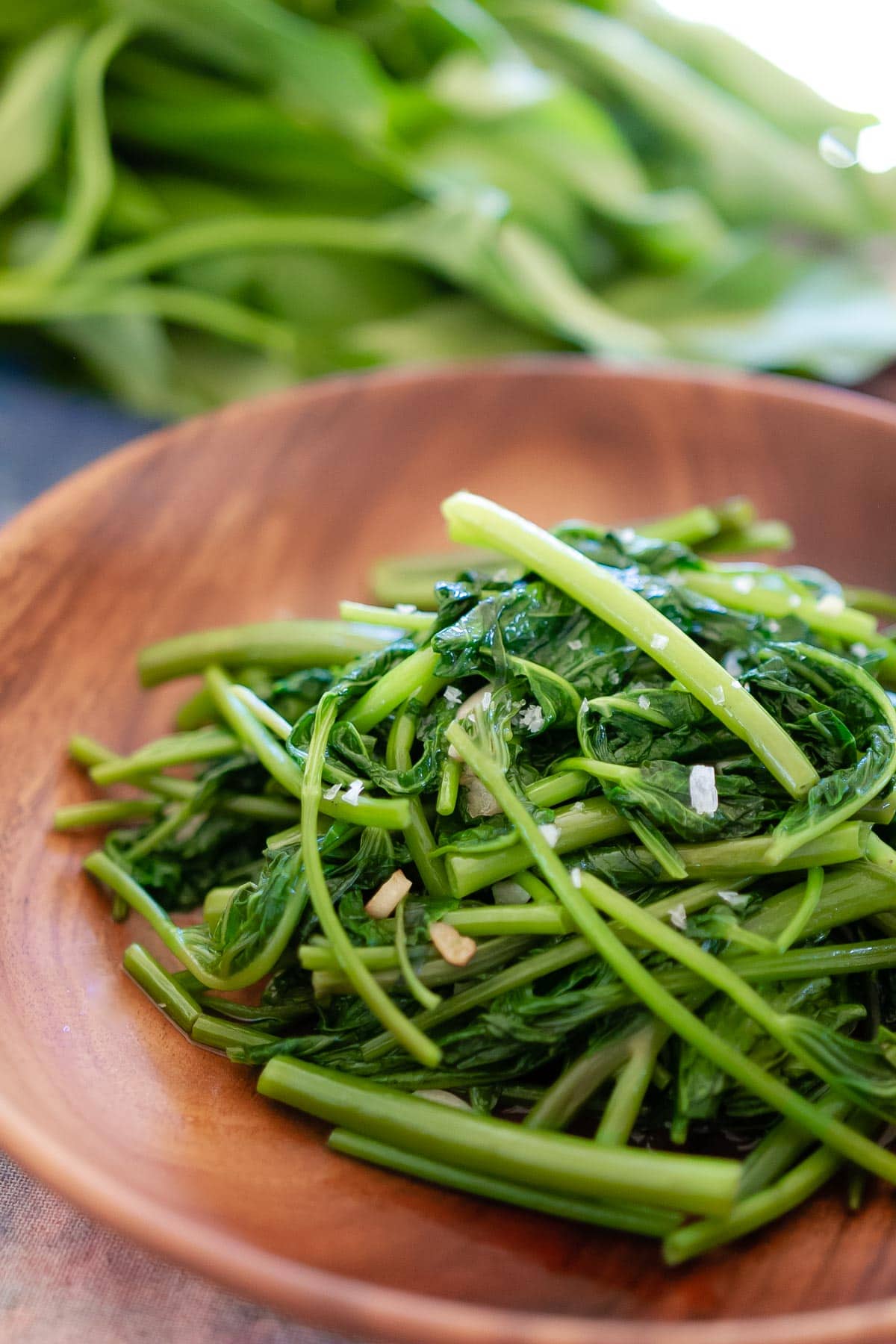
This might just be the easiest morning glory recipe out there, ready in just 10 minutes. Also known as water spinach, or 空心菜 (kōng xīn cài) in Chinese, which in my biased opinion, is one of the top 3 leafy greens. The crunchy hollow stems are the best part, and it was one of the first vegetables I actually liked as a kid. My favorite way to enjoy it is stir-fried morning glory with garlic (蒜炒空心菜), a simple preparation common in both Taiwanese and Chinese cooking, as shown in this recipe.
Stir-frying in a well-seasoned wok over high heat infuses the dish with a delicious wok aroma known as the "breath of the wok" 鑊氣 huò qì (or "wok hay" in Cantonese). "Qì" or "hay" means "energy" or "life breath," and this smoky flavor is part of what makes stir-fried dishes like this one taste so good.
update notes: Originally published on September 26, 2020, I've updated this post and recipe on August 28, 2026, with clearer instructions and a few notes on how I tested the recipe to make sure it really captures the flavor of this dish from restaurants and food vendors in Taiwan. I've also added a quick look section to help you get to the information that matters most to you, along with my top tips as a professional chef and updated infographics on how to pick the best quality morning glory.
✦ a quick look at this recipe
- morning glory (also called water spinach, ong choy, etc.)
- garlic
- ground white pepper
- kosher salt
The morning glory vegetable is commonly used in many Asian homes. I usually have at least 1 to 2 bunches stocked in my refrigerator every week when it's in season since it's super easy to prep and cook, and makes a great side dish.
If you love stir-fried greens as much as I do, you might also enjoy my stir-fried pea shoots recipe. Below, I'll walk you through exactly how to pick the best quality bunch for the ideal texture and flavor.
jump to:
- ✦ a quick look at this recipe
- 💭 what is morning glory (water spinach)?
- 🖊️ chef's recipe testing notes
- 📝 ingredient notes and substitutions
- 📖 flavor variations
- 🛒 where to buy
- 👩🏻🌾 how to pick the best quality morning glory
- 🎥 cooking video
- 🔪 how to stir-fry morning glory (visual guide)
- 🍱 what I serve this with
- 🍲 equipment
- ❄️ storage & reheating
- 💭 stir-fried morning glory recipe FAQs
- 🧑🍳 cooking with kids
- ✨ cindy's chef tips & common mistakes to avoid
- 🥬 more asian leafy green recipes
- taiwanese stir-fried morning glory with garlic 蒜炒空心菜
- 💬 reviews + comments
💭 what is morning glory (water spinach)?
Morning glory is also known as water spinach or 空心菜 (kōng xīn cài) in Chinese, which translates to "hollow heart vegetable," and ong choy in Cantonese. As you can see, it's named after its hollow, crunchy stems.
Other names include pak boong, kang kong, swamp cabbage, water convolvulus, and its scientific name Ipomoea aquatica, to name a few.
It has a mild flavor with a subtle hint of sweetness when cooked. The stems are both fun and satisfying to eat! The best part is that the leaves are tender but keep their texture fairly well when stir-fried, unlike baby spinach or baby bok choy.
I first tasted it when I was 8 years old, living in Taipei, Taiwan. It's also commonly used in China and many Southeast Asian countries (I also love how they cook it in Thailand, too).
nutrition and benefits
Like other dark leafy greens, morning glory is a good source of vitamin A, vitamin C, folate, iron, and calcium, but that's not why I love it (even as a dietitian). The texture, flavor, and ease of cooking are what make me a huge fan.
🖊️ chef's recipe testing notes
- My first rounds of testing were based on my training as a chef, along with memories of tasting this dish as a kid and an adult.
- I've tested this recipe many times over the last 15+ years and have cooked and served it in professional kitchens to private clients and more.
- In addition to cooking it for clients, I tested it with my recipe tester hat on: weighing the morning glory each time to keep measurements consistent, and timing the cook time so the instructions are as accurate as possible. Keep in mind cook time will vary a bit depending on your stove and pan.
- I almost always order this dish at Taiwanese, Chinese, Thai, and various East and Southeast Asian restaurants whenever it's available, including food vendors in Taiwan, so I'm constantly tasting it fresh and comparing my recipe to restaurant and takeout versions.
📝 ingredient notes and substitutions
This is a simple recipe with minimal ingredients, though I do have a special note on the salt I use, and I'll show you how to pick the best quality morning glory below.
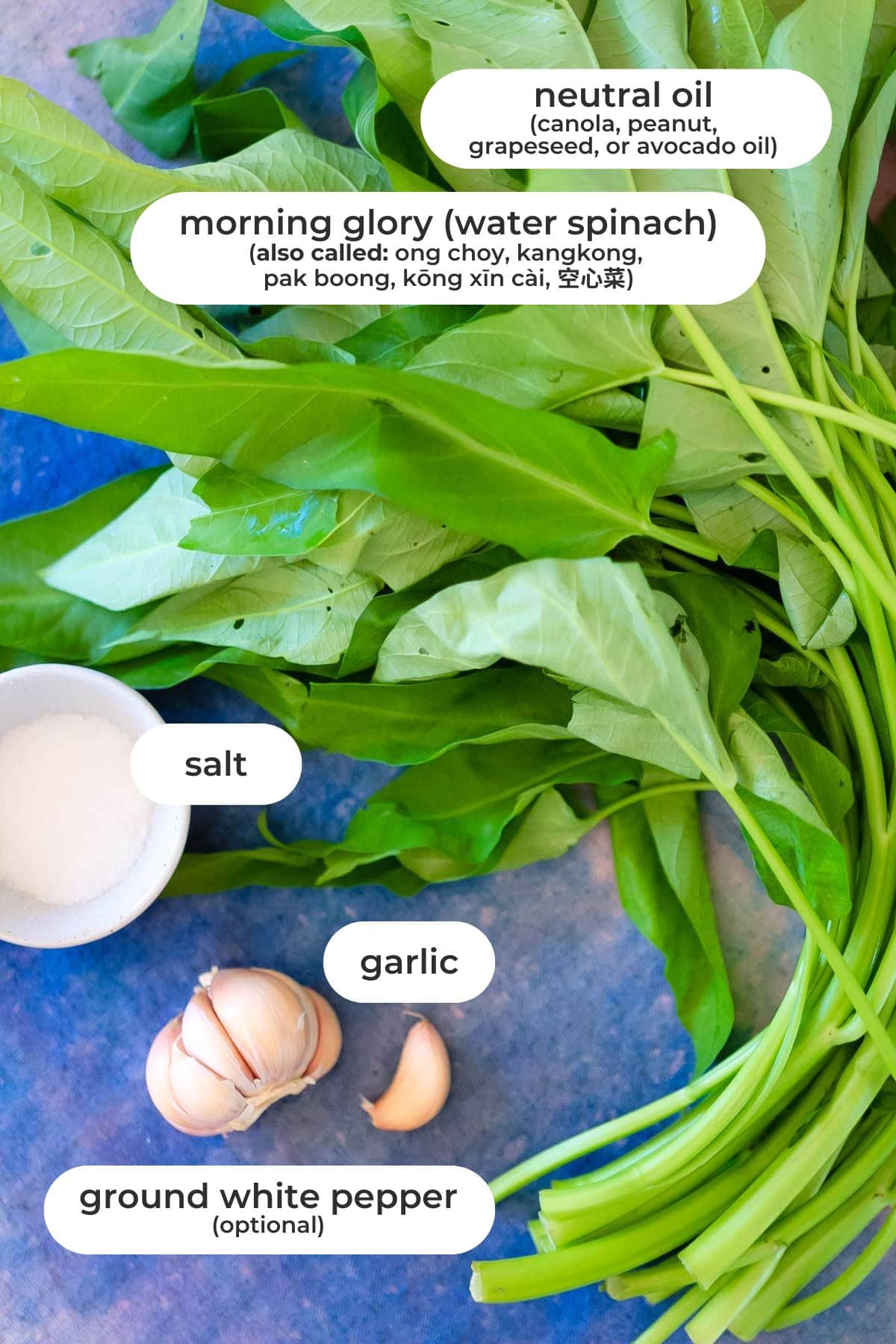
- morning glory / water spinach - if you're searching for this at a Taiwanese or Chinese grocery store, it's called kōng xīn cài (空心菜) in Mandarin, Chinese, or ong choy in Cantonese. Exploring more stir-fried vegetables? Also try my stir-fried pea shoots or other vegetable recipes listed below.
- fresh garlic - since this dish has minimal ingredients, fresh garlic works best to complement the light flavor of morning glory.
- neutral cooking oil - I use canola oil most often, or any other neutral-flavored oil with a higher smoke point will work. Other good options include peanut oil, grapeseed oil, or avocado oil.
- salt - I recommend Diamond Crystal brand kosher salt (*paid affiliate link) since it has a lower sodium level, making it easier to layer the seasoning without accidentally oversalting a dish. It's the same salt I've used in restaurants and professional kitchens. It can be found in some grocery stores. ✴️ If using sea salt, use half of the amount listed in the recipe.
- ground white pepper - optional, but highly recommended. With just a sprinkle, you won't notice the spice, but it'll add depth to this simply seasoned dish.
Check out the recipe card at the bottom of this post for a full list of ingredients and quantities.
other asian vegetables you can stir-fry
Although no other vegetable quite compares to water spinach, plenty of Asian greens and vegetables can be cooked using this same cooking method and recipe:
- Yu choy 油菜 (yóu cài) or choy sum 菜心 (cài xīn)
- Taiwanese cabbage
- Chinese broccoli 芥蘭 (jiè lán)
- Sliced cucumber (use a variety like Japanese, Persian, or lemon cucumbers that have smaller seeds and a thinner peel)
- Taiwanese spinach (not baby spinach, which would wilt too much)
- Kale leaves, de-stemmed and roughly chopped
- Bok choy 白菜 (bái cài)(note: regular bok choy will have a better texture than baby bok choy)
📖 flavor variations
Here are a few recipe variation ideas you can try if you're looking to experiment or make something that works better for your dinner guests, friends, or family.
boost of flavor
shacha sauce - For fellow hotpot fans who have shacha sauce 沙茶醬 on hand, you can add a teaspoon right when you add the morning glory to the pan. The sauce gives this dish an umami punch. Just thinking about it makes me hungry.
note: this sauce contains soybean oil, fish, shrimp, sesame, coconut powder, etc., in case you have dietary needs to consider.
By the way, my favorite shacha sauce is the Bull Head BBQ Sauce 牛頭牌沙茶醬 (*affiliate link), and yes, different brands really do taste different. I always keep at least 2 unopened large cans of the Bull Head brand in my pantry. I just can't eat Taiwanese hotpot without it, and it's also really good with stir-fried spinach or yam leaves!
fermented bean curd (furu) - You can also add fǔrǔ (腐乳), Chinese fermented bean curd, for a Chinese variation, though I personally prefer the other flavors mentioned above since they complement the mild and lightly sweet flavor of morning glory. The fermented tofu has a strong, slightly funky, and very salty flavor, which is what makes it so good with congee (rice porridge).
spicy - If I'm eating this on my own, I'll add a fresh Thai chili pepper since I love the flavor and spice. I keep the seeds in and all, but I do love lip-burning spicy food. When cooking this dish for others, I'll usually remove the seeds or omit the chili altogether. If you feel like a spicy kick, add it in with the garlic.
make it a main dish
Stir-fry thin slices of beef loin or chicken thigh/breast before adding the morning glory to your wok or pan. Shacha beef is a popular dish. You can prepare the meat as shown in my shacha chicken recipe.
🛒 where to buy
online
Most recently, I've been buying morning glory from Weee! (*affiliate link) since it's more consistently available and I've only gotten good-quality ones. Try white ong choy (*affiliate link) when it's available - the stems are often bigger and more tender.
farmers markets
It's sometimes available at farmers markets when in season (summertime), such as Yao Cheng Farm and Her Produce at the Santa Monica Farmer's Market. I used to frequent Thao Family Farm, but they only supply directly to restaurants now.
asian grocery stores
You can also find it in well-stocked Taiwanese, Chinese, Thai, or other Southeast Asian grocery stores, usually displayed in the refrigerated produce area.
The ones in the grocery stores are sometimes more fibrous and don't last as long in the fridge since they're not freshly picked, so I try to get it from the farmers market when I can.
👩🏻🌾 how to pick the best quality morning glory
With a simple dish like this one, where the vegetable is the star, the most important factor for recipe success is starting with quality ingredients. Here are three key characteristics to keep an eye out for when picking morning glory, as well as things to avoid when possible.
For even more useful information, you can check out my comprehensive guides to Asian vegetables, including my chef's guide to water spinach that I'll be publishing soon.
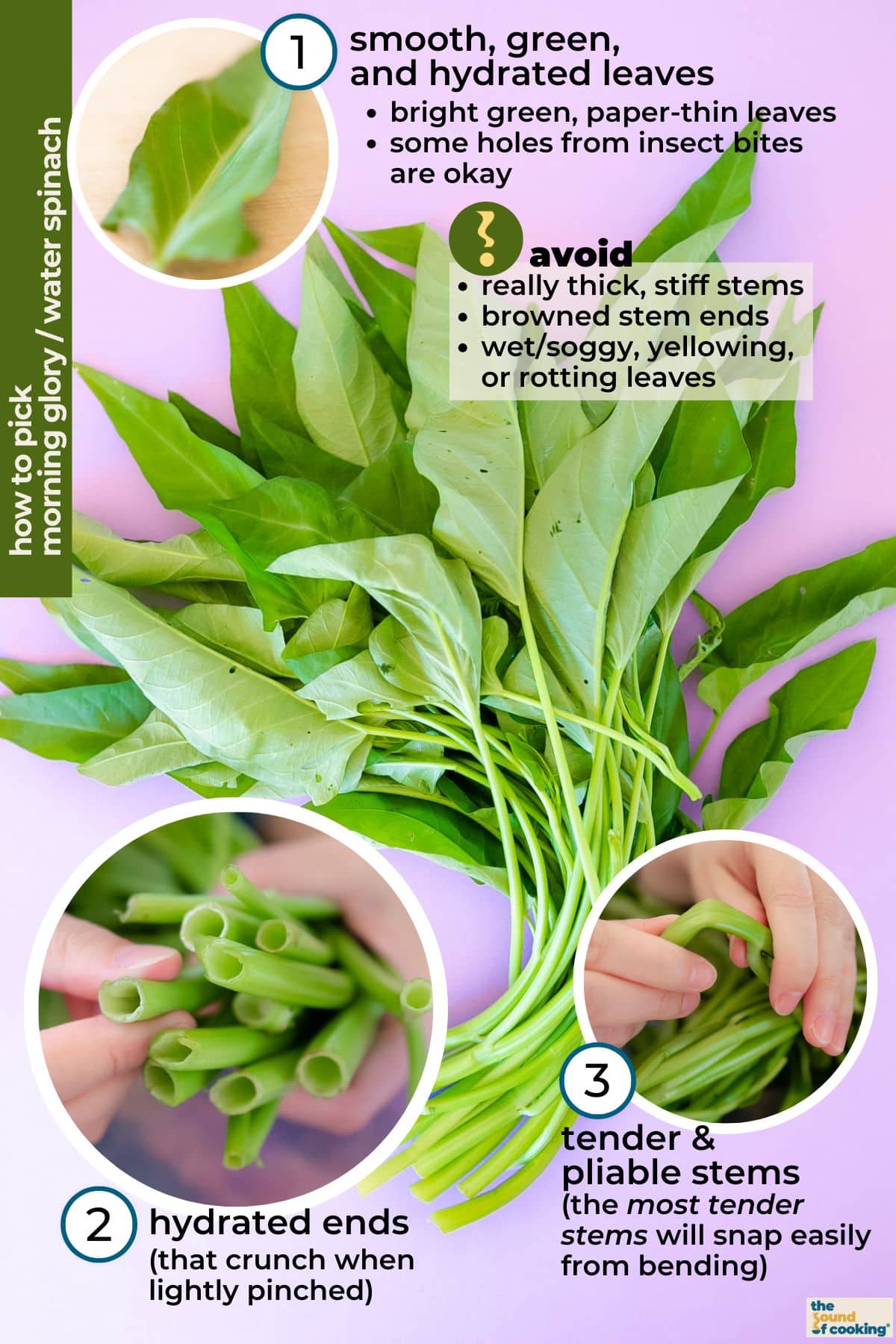
what to look for
- smooth, green, hydrated leaves - Bright or dark green water spinach leaves show that it's fresh (avoid wilted or yellow leaves). Also look for smooth, paper-thin leaves, which show it's younger and will taste sweeter. A few small holes from insect bites are okay too, and don't necessarily mean lower quality.
- hydrated ends - The bottom of the stems should look hydrated (not porous) and mostly green. Look for tender stems that crunch when you pinch them.
- tender and pliable stems - The stems should be pliable as shown in the photo above (not stiff), and the most tender stems will snap easily when bent. That's how you know they're tender and not fibrous.
what to avoid
- thick, stiff stems - If the stems feel woody and don't bend at all, they're older and will need to be trimmed. Otherwise, they'll be tougher to eat.
- browned stem ends - Excessive browning at the ends is a sign the morning glory may have been sitting for a while and is starting to dry out. That said, some browning can be due to oxidation (exposure to air) and can still be okay as long as the stems are still pliable.
- wet or soggy leaves - The leaves can start to get soggy if stored with too much moisture trapped. Avoid any leaves that feel slimy or wet to the touch when buying.
- yellowing or wilted leaves - This is a sign the bunch may be on its way out. They may have less flavor, a loss of texture, and a loss of water-soluble nutrients such as vitamin C (I just couldn't stop by dietitian brain here) by this point.
🎥 cooking video
Watch the video below for a virtual cooking class at your own pace. I show every step of this recipe in The Sound of Cooking® video series. See the full collection of cooking videos on YouTube or browse other recipes right here on my site.
Turn on your volume to hear the sounds of cooking. Cooking can be meditative and a great way to slow down, relax, and engage your senses. Read more on my about page.
🔪 how to stir-fry morning glory (visual guide)
I'm going to go through each step in detail below, including step-by-step photos of how to wash, dry, cut, and cook morning glory. In a hurry? You can jump straight to the printable recipe.
how to cut
Cut the morning glory into shorter pieces so it's easier to eat with chopsticks. Keep the stems separated from the leaves.
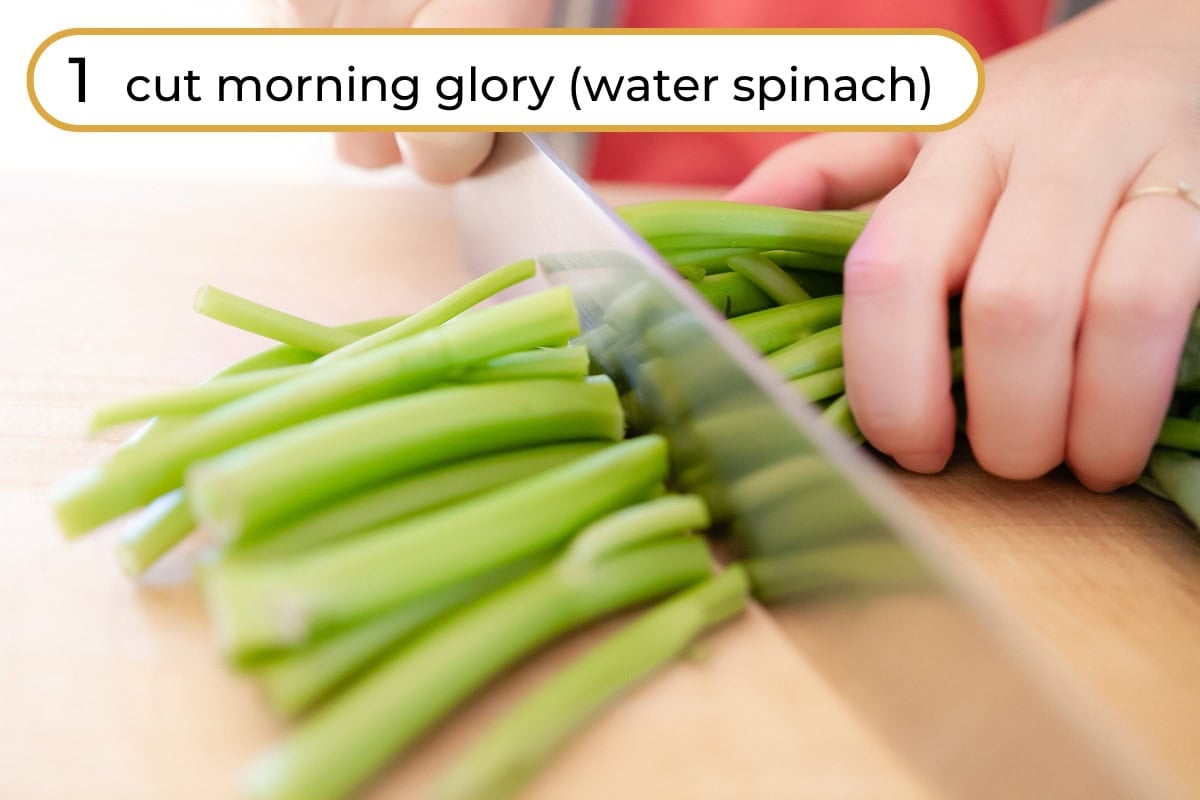
For about 4 servings as a side dish (½ cup each):
Cut about 8 ounces (~230 grams) of fresh morning glory into 3-inch sections (~8 cm) starting from the bottom (stem) end.
note: If you're only able to find ones with thicker stems, you can trim the ends off by cutting 2-3 inches off the bottom.
You can tell if the stems are slightly fibrous by bending them (see the photo under the "how to pick" section above for reference). You'll feel resistance when bending the stems if they're not as tender.
This is another reason I like to buy from a local farmer when it's available. The vegetables from the Chinese grocery store near me are sometimes less fresh or more mature, which takes longer to prep since you have to pick out the tender portions.
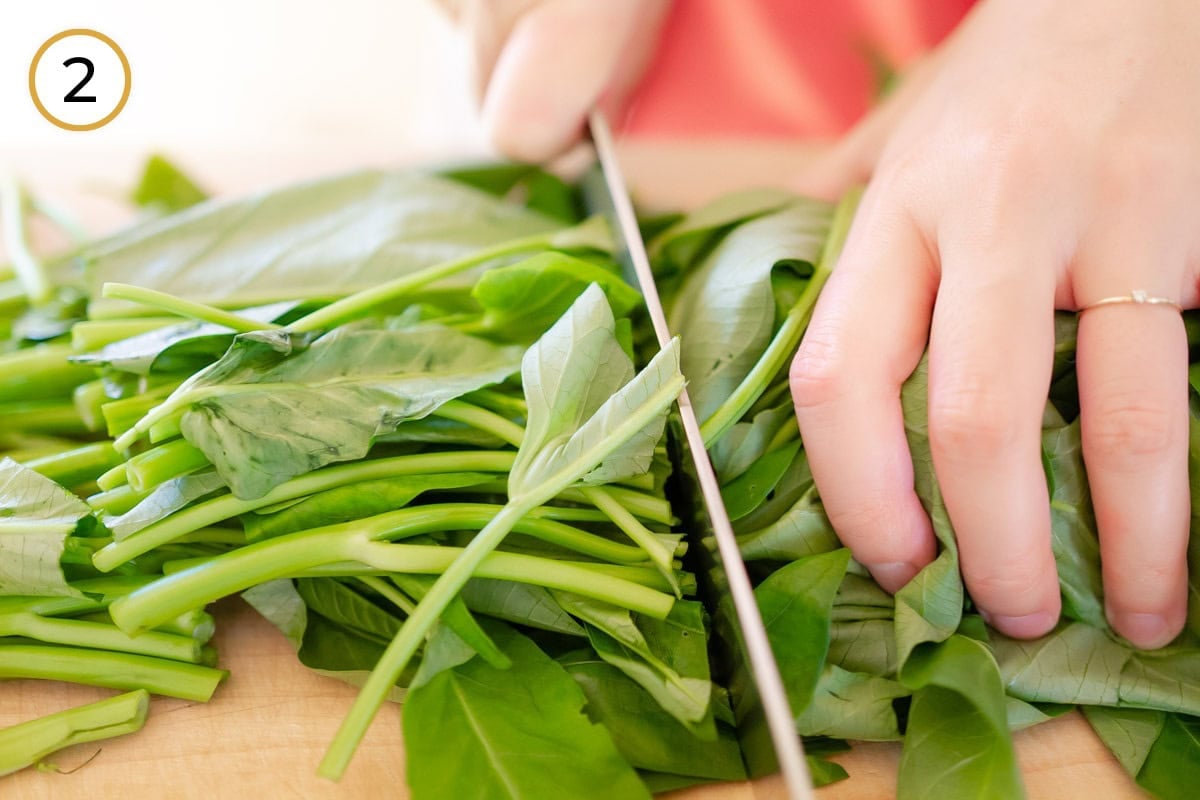
Cut the leaves lengthwise into 3-inch sections (~8 cm) as well.
wash and thoroughly dry
Allowing the vegetables to thoroughly dry before cooking is a key step to getting that restaurant-quality taste.
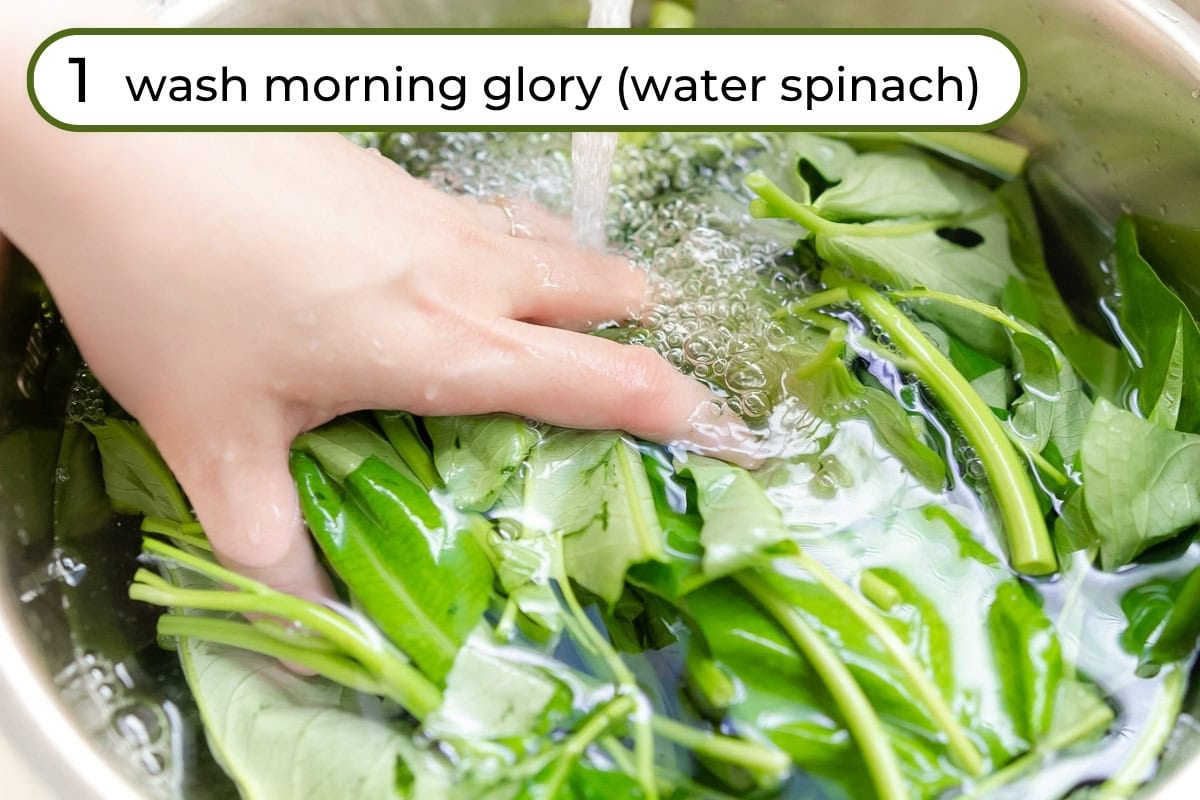
Wash the morning glory under cold water. If it's already cut, keep the stems separated from the leaves. I like to do this in a large mixing bowl or a clean, sanitized sink for larger quantities.
Fill the bowl with cold water so the greens are fully submerged, give them a swish, and let them sit for 10 seconds to allow any grit to sink to the bottom. Then, while holding the morning glory against the bowl, drain the water.
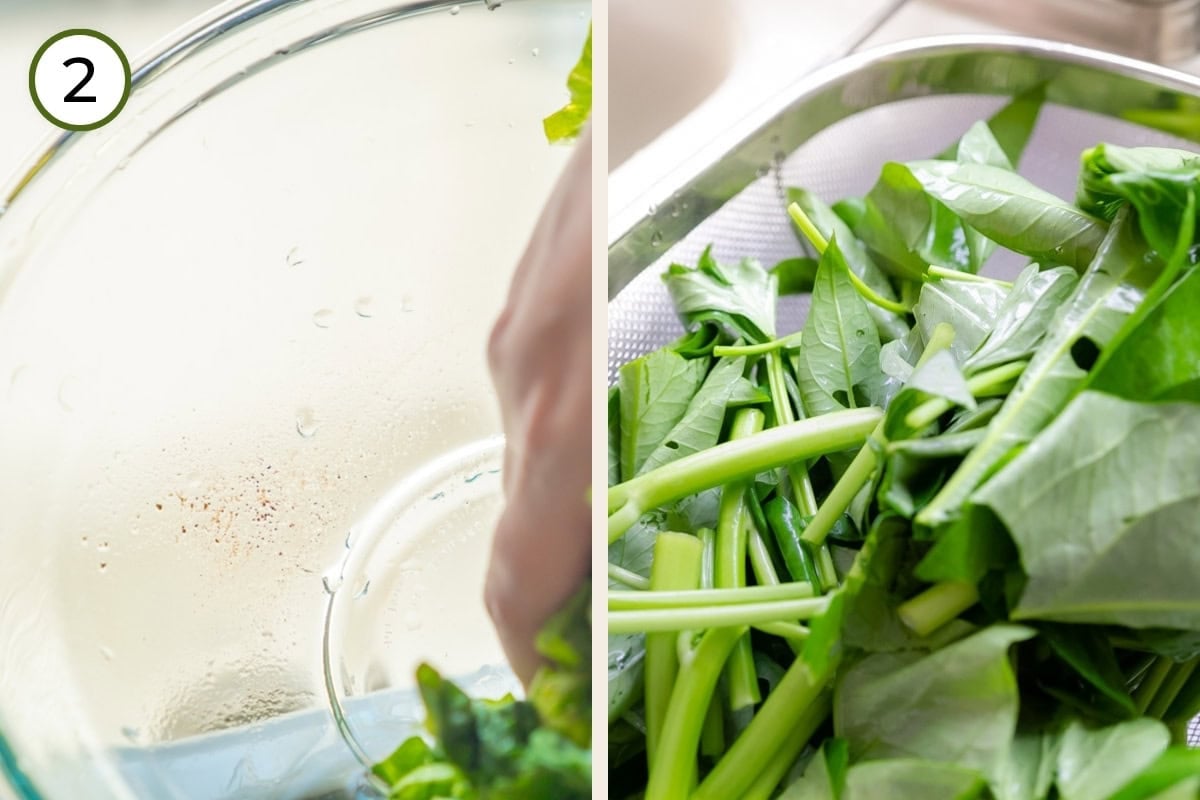
If you still see grit at the bottom of the bowl, rinse it out and repeat the process until the water runs clear. I usually do this for at least 3 rounds.
key step: Allow the washed morning glory to drain well in a colander so there's minimal excess water. Keep the stems separate from the leaves if they're on the thicker side.
pro tip
Let the washed morning glory continue draining in the colander while you prepare the garlic (peel and slice 2 cloves), then shake off excess water before cooking. Otherwise, it'll steam in the wok or pan and won't get the pleasantly smoky "breath of the wok" 鑊氣 flavor from a well-seasoned wok, carbon steel, or cast iron pan.
stir-fry
Before you begin stir-frying, always have your ingredients ready nearby. This includes having the salt measured out or ready to scoop, too.
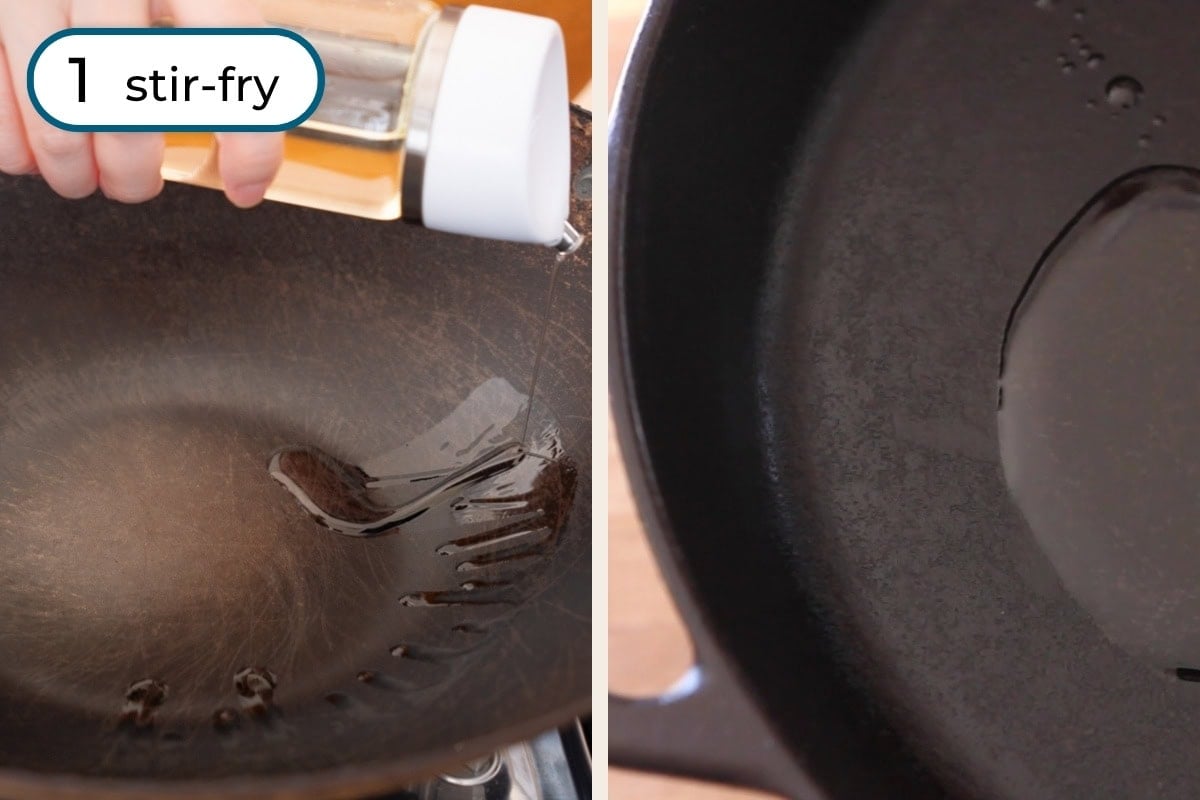
1. Heat a 14-inch seasoned wok (left photo) or 10.25-inch cast iron pan (right photo) over medium-high heat until hot and just starting to smoke (about 15 seconds for a wok, or 3 minutes for a cast iron pan).
Add 1 tablespoon of canola oil.
By the way, I love using this oil dispenser (*affiliate link) for stir-fries since it makes it easy to control how much oil you drizzle, and the spout is designed so oil doesn't drip down the container.
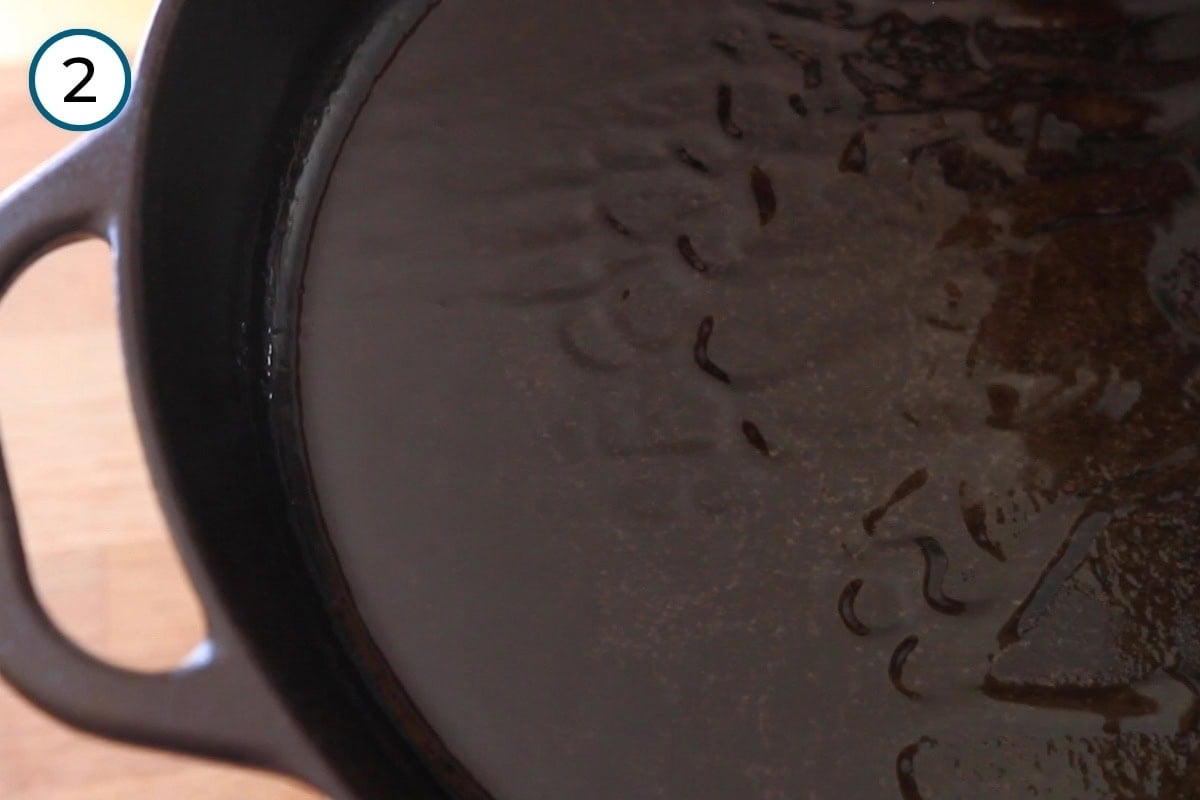
2. Slightly tilt the pan to evenly coat the cooking surface. You can tell the pan is hot and ready when you see ripples in the oil, as shown above.
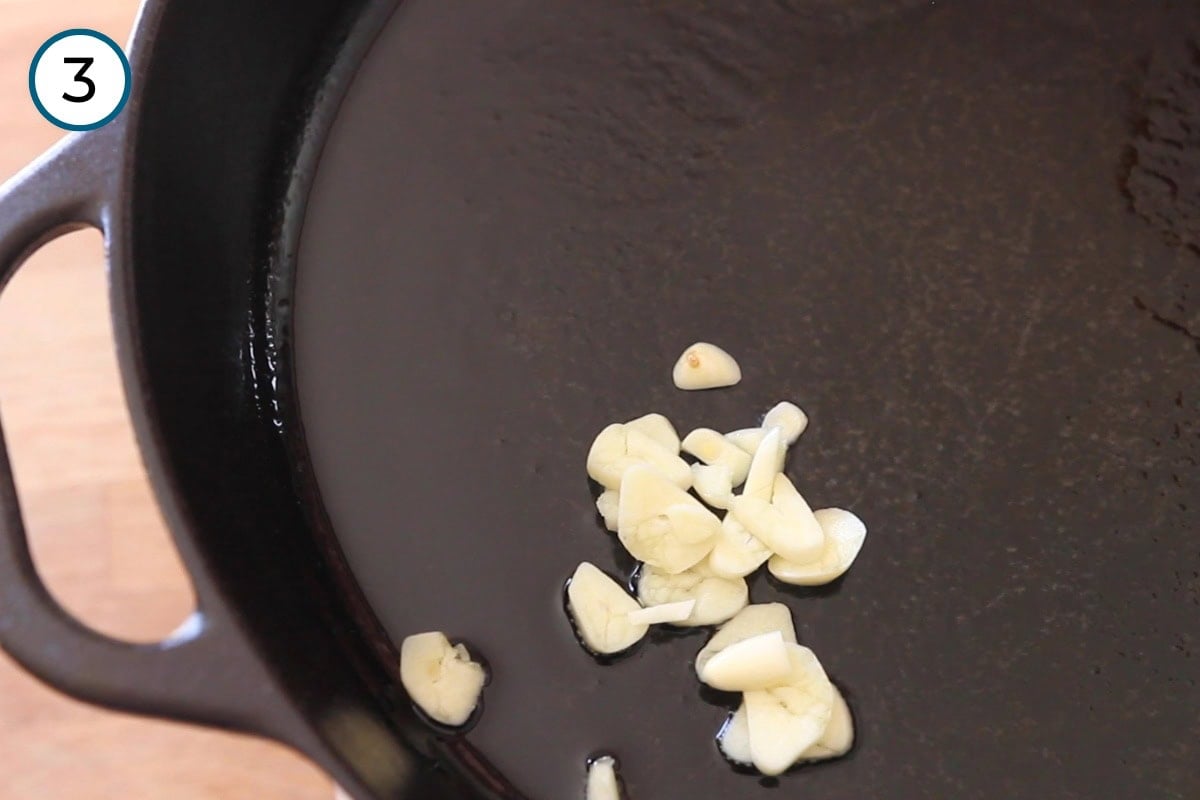
3. Immediately add the sliced garlic (from 2 large cloves).
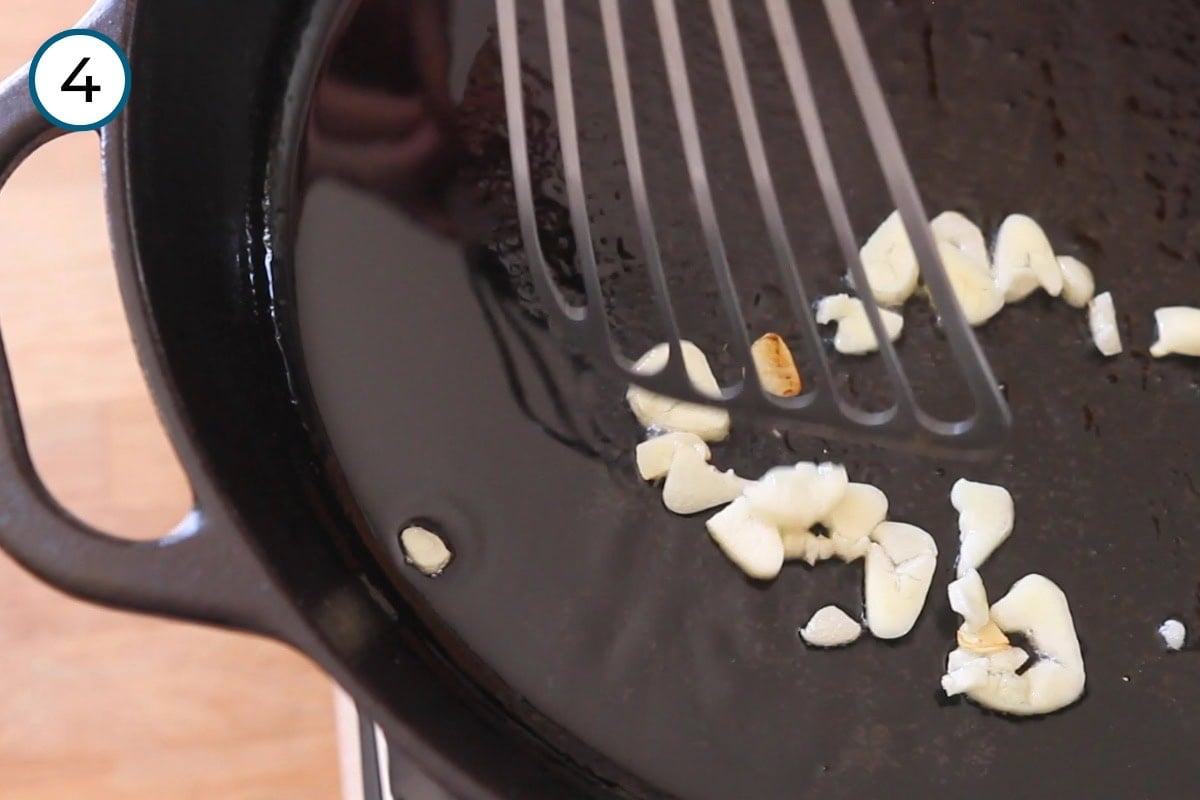
4. Stir for about 5 seconds until the garlic is fragrant. (*Keep stirring, flipping the garlic to prevent it from burning).
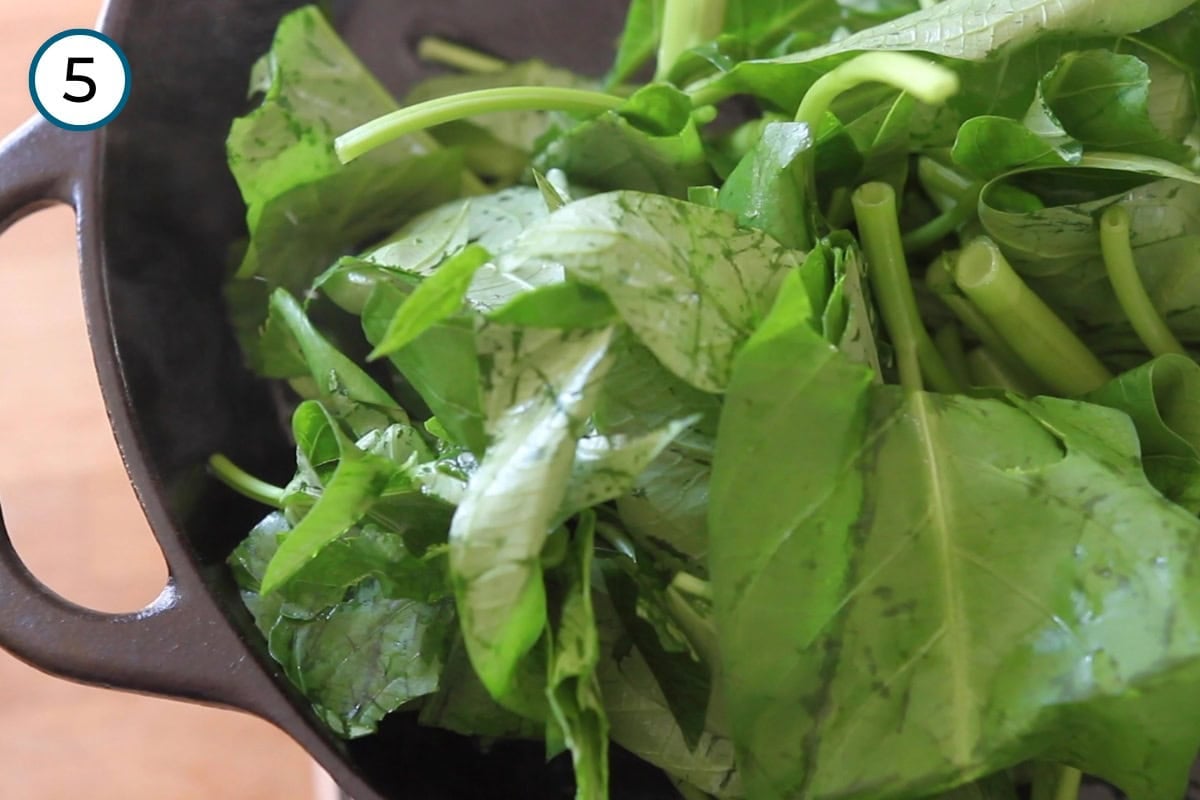
5. Add the morning glory stems and toss with a spatula. Add these in quickly to prevent the garlic from burning.
Increase the heat to high, and cook for 30 seconds, tossing continuously.
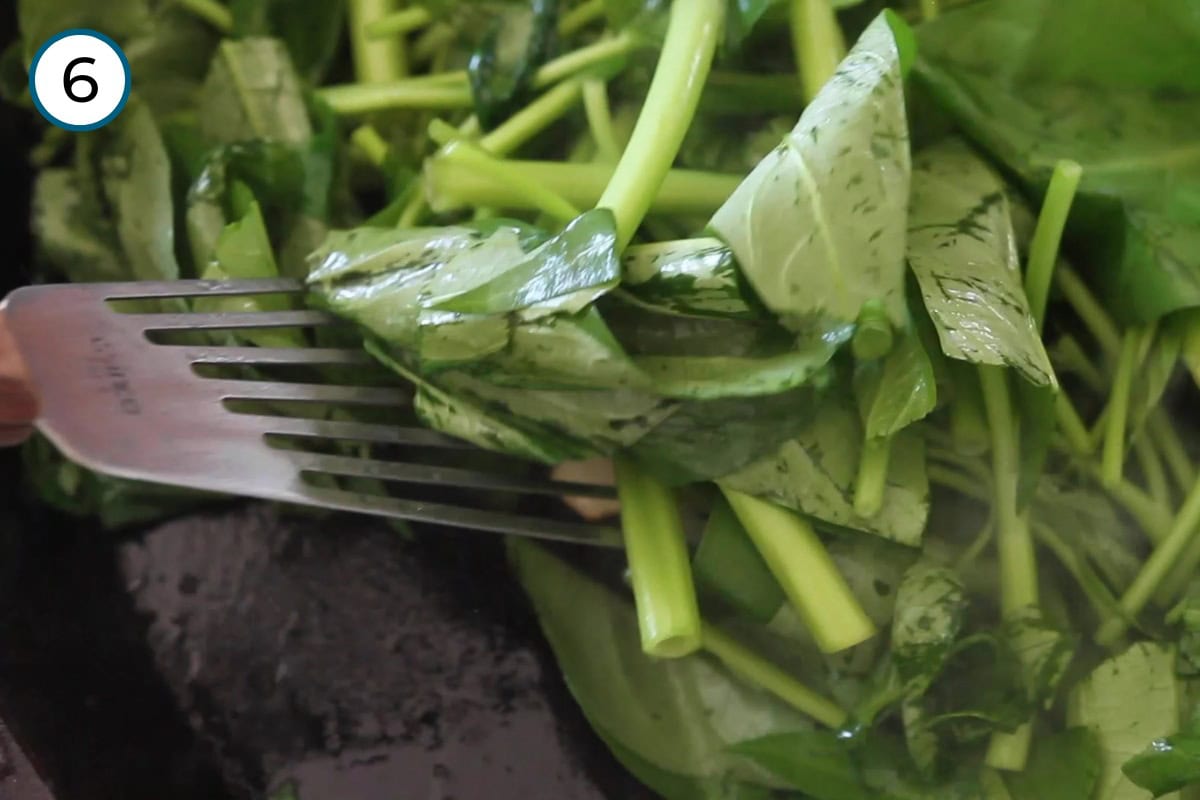
6. Add in the leaves and continue tossing with a spatula.
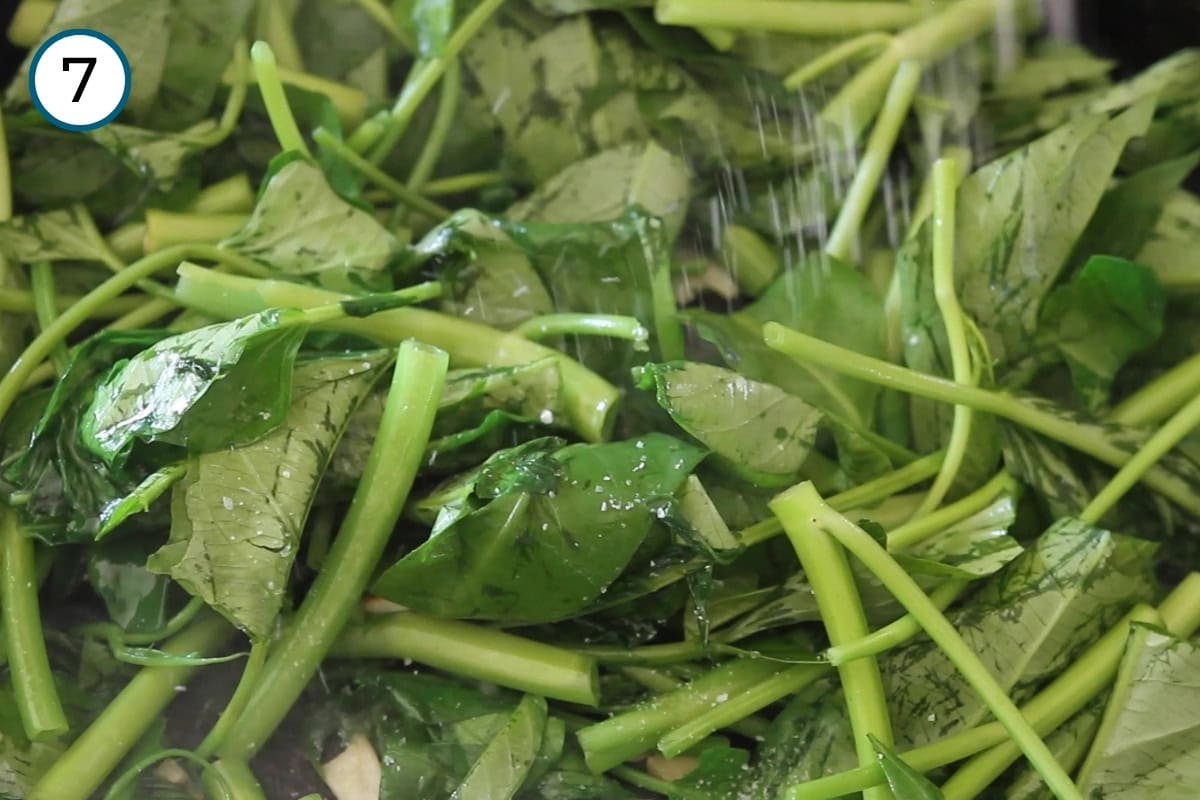
7. Season with ½ teaspoon Diamond Crystal kosher salt (use half the amount if using sea salt or table salt).
Optional: Add a sprinkle of ground white pepper.
Stir-fry the contents in the pan by constantly flipping and moving the vegetables with your spatula to prevent burning.
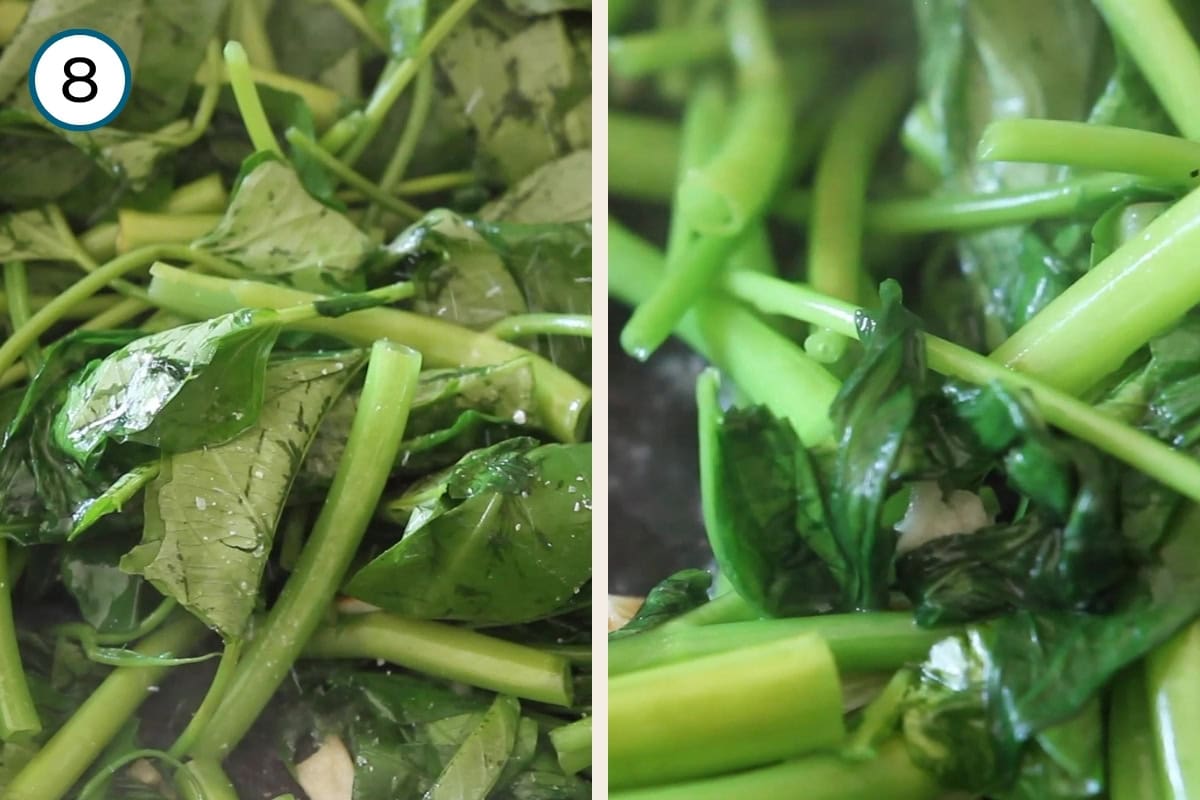
8. Continue to toss the morning glory with your spatula. Stir-fry until the stems and leaves turn brighter green (about 2 minutes), then immediately turn off the heat.
visual cue: The left photo shows morning glory that still needs to cook a bit longer, and the right photo shows how it looks once it's turned brighter green and is done cooking.
Transfer to a serving platter, top with optional flaky sea salt (if using), and serve hot.
pro tip
Besides a wok spatula, I love using a fish spatula (*paid affiliate link) for quick vegetable stir-fry dishes. It's lightweight and easy to use, and the angled top makes it easy to toss everything in a wok. Just be careful not to burn your hand on the wok edge since fish spatulas have shorter handles. For larger quantities, or for a safer option, a longer wok spatula may be a better choice.
🍱 what I serve this with
To make this into a meal, you can pair this morning glory recipe with:
- Taiwanese vegetable mei fun (stir-fried rice noodles)
- A quick stir-fry dish like sha cha chicken with white rice
- Chinese steamed fish
- A simple no-cook silken tofu recipe (vegetarian option)
- A comforting bowl of pork rib bitter melon soup, daikon pork rib soup, sesame oil chicken soup, or any other Asian soups
- End with fresh cut fruit, hobakjuk (Korean pumpkin porridge), mochi muffins, taro boba milk tea, or Taiwanese shaved ice!
meal prep ideas - I've been meal prepping with Taiwanese mei fun (rice noodles) or an easy soup for the week and adding in this morning glory recipe for a complete meal. It's perfect for an easy meal since I can finish cooking the veggies while the rice is reheating.
🍲 equipment
Note: Some of the links below are affiliate links, which means we do make a small profit from your purchases (your price is not affected by this commission). We are a participant in the Amazon Services LLC Associates Program, an affiliate advertising program designed to provide a means for us to earn fees by linking to Amazon.com and affiliated sites. If you click on an affiliate link, you consent to a cookie being placed on your browser for purposes of tracking commissions.
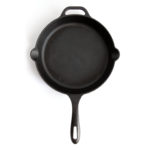
Using a wok, cast iron, or carbon steel pan will make all the difference for Asian leafy greens like this one. A well-seasoned and hot pan will give the water spinach that wok flavor.
- the wok I currently use (14-inch, flat bottom)
- an affordable cast iron pan I use when my wok isn't available
- fish spatula or wok spatula
❄️ storage & reheating
This dish is best served immediately after cooking.
fridge: Store raw and unwashed morning glory wrapped in either a large kitchen towel (*affiliate link), clean paper towels, or a cloth produce bag, then store it in your fridge's vegetable drawer. It's best not to store it in a plastic bag since the leaves will get mushy over time.
Fresh morning glory can last up to 5 days in the refrigerator, but the leaves will start to wilt after day 3. It'll still taste great though, once you liven them up with cold water. You'll know that it's gone bad if the stems or leaves become moist and soggy. Once cooked, store in a covered container for 1-2 days in the fridge.
prep ahead for easier weekday cooking - Prep your morning glory so they're ready to go! Pre-rinse, drain, dry it (make sure it's thoroughly dried!), and then cut it up and store it in an airtight container in the fridge. That way you can quickly grab it and add it to dishes in the next day or two.
prep-ahead: Cleaned, cut, and thoroughly dried morning glory can be stored with paper towels in a covered container or sealed produce bag for up to 1 day before cooking. Keep the stems separate from the leaves for the best stir-fry results.
reheat: Lightly steam for 30 seconds, or reheat in a microwave, covered, starting with 10-second intervals. It reheats quickly and can overcook easily if you're not careful.
💭 stir-fried morning glory recipe FAQs
Stir-fried morning glory that turns out soggy is usually due to too much moisture while cooking. This can be caused by the greens not being thoroughly dried after washing, or by overcrowding the pan, both of which lead to the vegetables steaming instead of properly stir-frying. Using a well-heated, seasoned wok or pan is important too. If the wok or pan isn't hot enough to start, the vegetables will release liquid slowly instead of cooking with dry heat.
🧑🍳 cooking with kids
What can kid chefs help with?
- help with picking a bunch with tender stems
- washing the morning glory
- peeling garlic
✨ cindy's chef tips & common mistakes to avoid
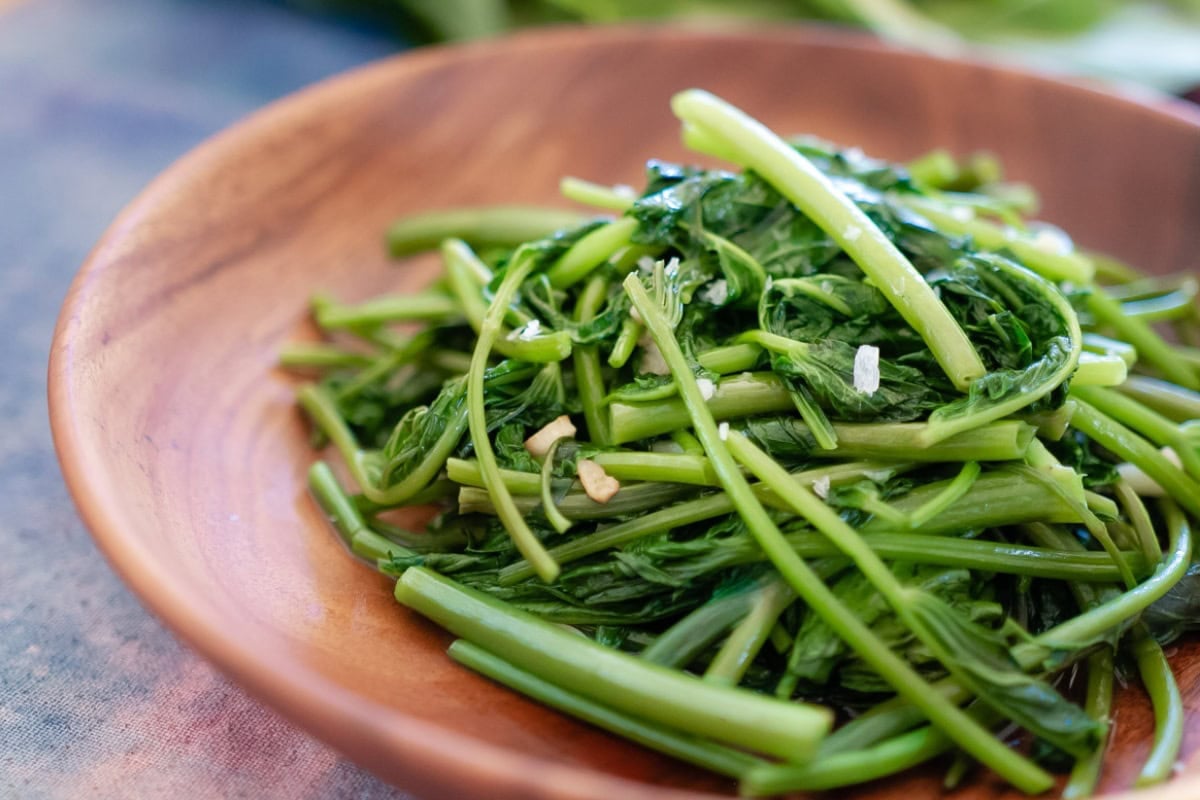
- don't skip the dry step - This step makes the biggest difference! Wet vegetables will steam instead of sear, so you'll lose that smoky "breath of the wok" flavor and end up with a soggier texture.
- don't overcrowd the pan - Too much morning glory in the pan won't allow proper airflow, which also causes steaming instead of stir-frying. This is why I specify a 14-inch wok in this recipe so you know what size pan would work best. If you're doubling the recipe, I'd rather you cook it in two batches.
- be intentional about when you add the stems - Most of the time, the stems need a slightly longer cook time than the leaves since they're thicker, which is why the recipe instructions say to add them into the pan first. Adding everything at once can lead to undercooked stems or overcooked leaves. In some cases when the stems are quite thin, they can be added to the pan with the leaves.
- don't start cooking until all your ingredients are ready to go - One of my top tips for all stir-fry recipes since things cook so fast. Once the garlic hits the heated oil, you only have a few seconds before it burns, so there's no time to be cutting or measuring other ingredients. Get everything prepped and within arm's reach before you turn on the heat.
🥬 more asian leafy green recipes
Here are more Taiwanese and East Asian leafy green vegetables to try.

💛 made it?
share your cooking story
If you've made this, take a moment to rate the recipe ⭐️⭐️⭐️⭐️⭐️ and leave a comment below. I would love to hear from you, and it's so helpful to others who want to try the recipe. ~Cindy
Want to Save This Recipe?
I'll send it to your inbox - just enter your email below. Plus, you'll get new recipes and pro cooking tips from me!
By submitting to this form, I consent to receive emails. Don't worry, you can unsubscribe anytime.
taiwanese stir-fried morning glory with garlic 蒜炒空心菜
happy with this recipe?
watch it step-by-step: the sound of cooking® video
ingredients
- 1 bunch morning glory (water spinach), washed (about 8 ounces / 230 grams)
- 1 tablespoon oil, canola
- 2 cloves garlic, peeled and thinnly sliced
- ½ teaspoon Diamond Crystal Kosher Salt, (use half the amount if using sea salt or table salt)
optional
- 1 pinch ground white pepper, optional
- 1 small pinch flaky sea salt, to finish

*The Instacart button above is an affiliate link, which means we do make a small profit from your purchases (your price is not affected by this commission).
instructions
prep
- Cut the morning glory into 3-inch (8-cm) sections starting from the bottom (stem) end.1 bunch morning glory (water spinach)
- Thoroughly rinse with cold tap water until the water runs clear, then drain in a colander, keeping the stems separated from the leaves. Allow the morning glory to drain well in a colander so there's minimal excess water. Otherwise, you won't get the "breadth of the wok" 鑊氣 flavor. See notes below on more fibrous stems.
cook
- Heat a 14-inch seasoned wok or 10.25-inch cast iron pan over medium-high heat until the pan is hot (about 15 seconds for a wok or 3 minutes for a cast iron pan).
- Add the canola oil, tilt the pan to evenly coat the cooking surface, and add the sliced garlic. Stir for 5 seconds until the garlic is fragrant, and add the morning glory stems and toss with a spatula. Add these in quickly to prevent the garlic from burning. Increase the heat to high, and cook for 30 seconds, tossing continuously. Then add in the leaves and continue tossing with a spatula.1 tablespoon oil, canola, 2 cloves garlic
- Stir-fry the contents in the pan by constantly flipping and moving the vegetables with your spatula to prevent burning. Season with salt and optional ground white pepper (if using), while you continue to toss the morning glory with your spatula. Stir-fry until the stems and leaves turn brighter green (about 2 minutes) and immediately turn off the heat.½ teaspoon Diamond Crystal Kosher Salt, 1 pinch ground white pepper
- Transfer to a serving platter, top with optional flaky sea salt (if using), and serve hot as a side dish.1 small pinch flaky sea salt
equipment and highlighted ingredients

notes
- hydrated ends - The morning glory is freshest when the stem ends look hydrated (not porous) and mostly green. Look for tender stems that crunch when you pinch them.
- tender and pliable stems - The stems should be flexible enough to bend, and the most tender stems will snap easily when bent. If a stem is stiff, it's likely older and may be too fibrous.
- shacha sauce flavor booster - Add 1 teaspoon of shacha sauce 沙茶醬 (mentioned in the blog post above) when you add the water spinach to the pan. The sauce gives this dish an umami punch.
- fermented bean curd (furu) flavor booster - You can also add fǔrǔ (腐乳), Chinese fermented bean curd, for a Chinese variation. The fermented tofu has a strong, slightly funky, and very salty flavor, so a little goes a long way.
- spicy - you can add half of a fresh Thai chili pepper (about ½ inch) when you add the garlic to the pan. I usually leave the seeds in (extra spicy), but you can remove the seeds first if you like (I highly recommend wearing gloves for this task).
- make it a main dish - Stir-fry thin slices of beef loin or chicken thigh/breast before adding the morning glory to your wok or pan. Shacha beef is a popular dish. You can prepare the meat as shown in my shacha chicken recipe.



Ramonas says
Haha!! I’m a spice addict too. I’d definitely add some chilli flakes to this too. It looks awesome and super healthy.
cindy chou says
So nice to meet another spice addict 😉 It's great with fresh Thai chili peppers!
Voula says
This looks delicious!
cindy chou says
Thank you! I hope you like it 🙂
Kay says
Super recipe, added some chilli flakes too!
cindy chou says
Glad you liked it! 🙂
Kate says
Thank you for sharing your "morning glory" recipe. I always wanted to know how to cook these vegetables. I did not know it was called that either. I am really glad I found this.
cindy chou says
Hi Kate! Water spinach is probably a more common name for this vegetable. So happy to hear you were able to give it a try! It's one of my all-time favorite leafy greens 🙂
Beth says
This looks so easy and so good! My Asian market in Denver doesn't have the greens now but I can't wait until summer, when they should.
cindy chou says
So glad you found this recipe and really hope you're able to find it at your local Asian market soon!
EA says
So fun learning about new vegetables. This looks so fresh and vibrant and super nourishing too!
cindy chou says
☺️