

I look forward to cooking together virtually as I show you some of my favorite recipes that highlight cruciferous vegetables beyond broccoli, cauliflower, and kale.
Different versions of these recipes are common in a variety of East Asian cuisines. They can be easily customized to meet individual tastes and food preferences too! I invite you to cook along with me and ask any questions that come to mind. I can't wait to share what I have planned for you.
jump to:
💭 grocery list
Don't forget to access the prepared grocery list (in the form of a Google Sheet).
miso soup
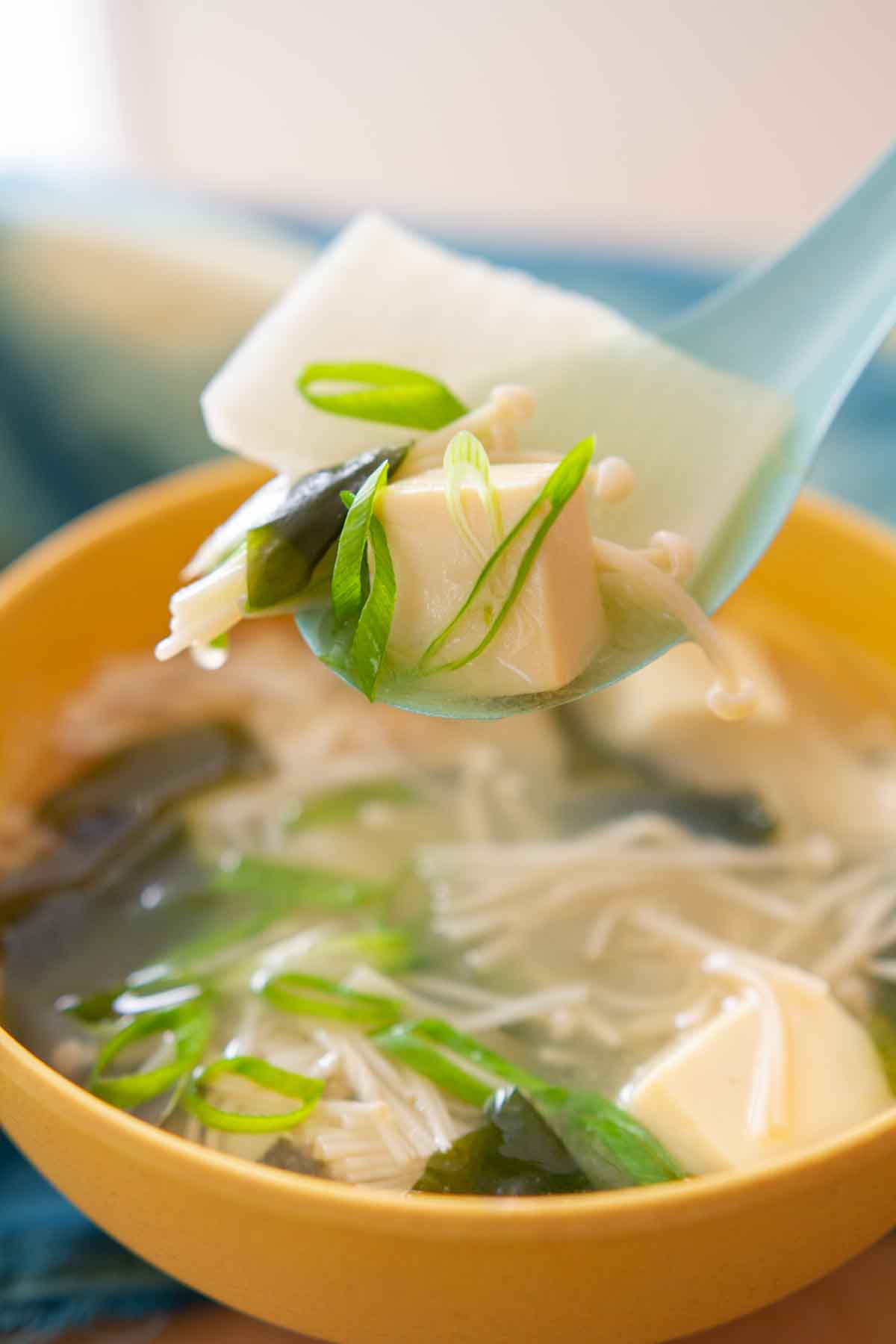
daikon miso-shiru (味噌汁)
📋 key ingredients
Note: salt is not needed for this recipe even though it's mistakenly shown in the image below.
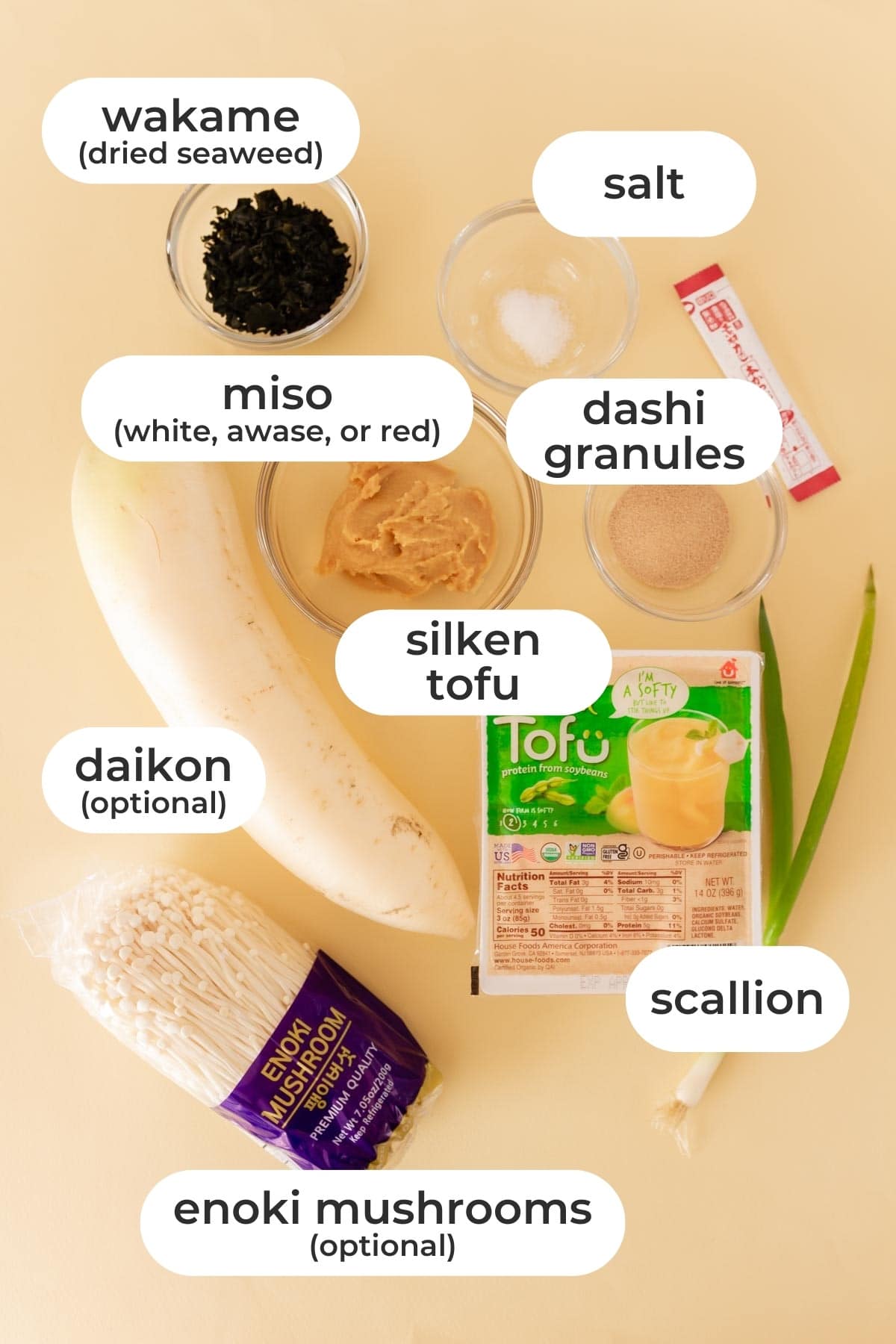
See the recipe in the session handout for quantities.
miso paste
The type of miso you use can also be customized to your taste because there are so many different kinds. For miso soup, I prefer:
shiro-miso (white miso) - It's sweet and smooth (fine-textured). Works great in soups and sauces/dressings to use with vegetables or salads.
- Amazon (affiliate link)
- Weee! option 1
- Weee! option 2 (gluten-free)
dashi options
There are quite a few options for dashi granules, but these are my favorites. I almost always have them stocked in my pantry since they're super easy to use.
- konbu stock (affiliate link) - use this for vegan or vegetarian miso soup since it's kelp-based soup stock.
- bonito dashi granules (affiliate link) - this is fish-based and my go-to one! It may be out of stock online, but you may be able to find it (or a similar one) at your local Japanese grocery store.
- dashi with flavor boosters (affiliate link) - this dried dashi stock includes even more flavor boosters like added MSG. I say 'added' since, like many other foods (including mushrooms and tomatoes), other dashi granules have naturally occurring MSG.
🔪 advance prep instructions
Complete recipe steps 1-3 in advance:
how to cut tofu and scallions
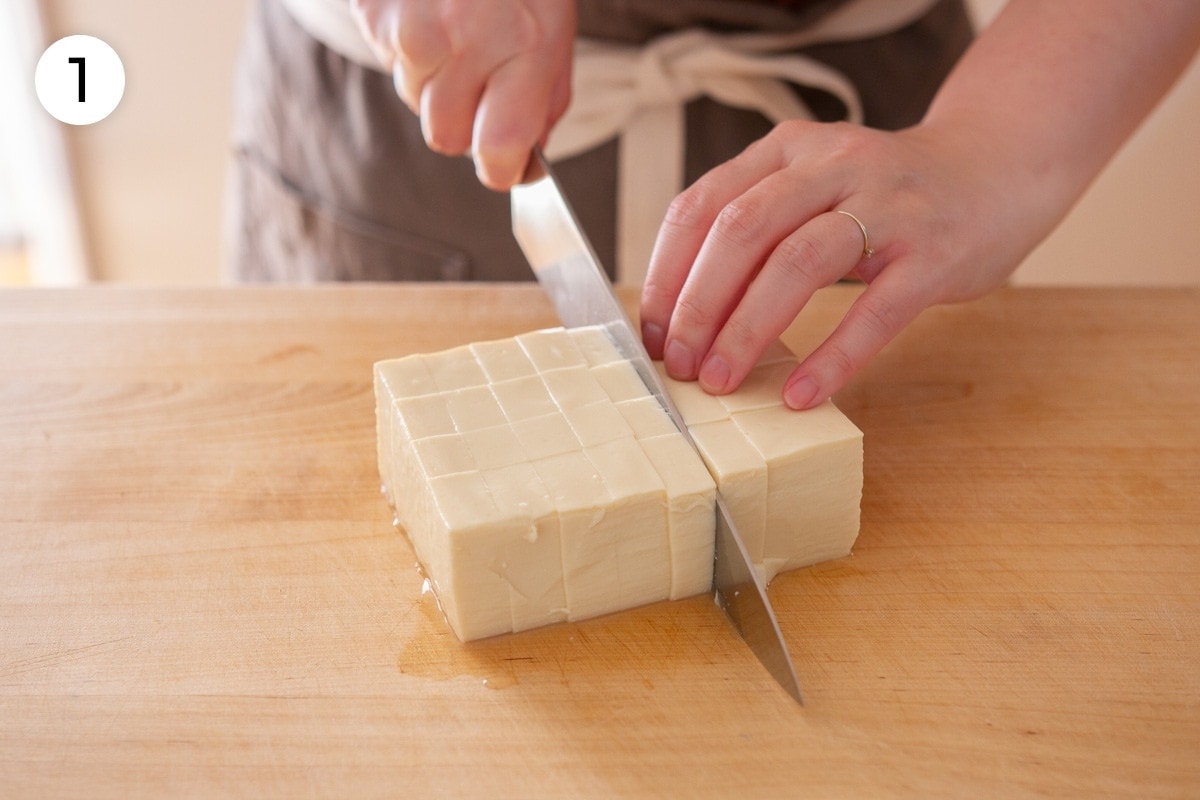
Prepare 1 (14-ounce) package of soft tofu by draining it, removing it from its container, and cutting it into cubes.
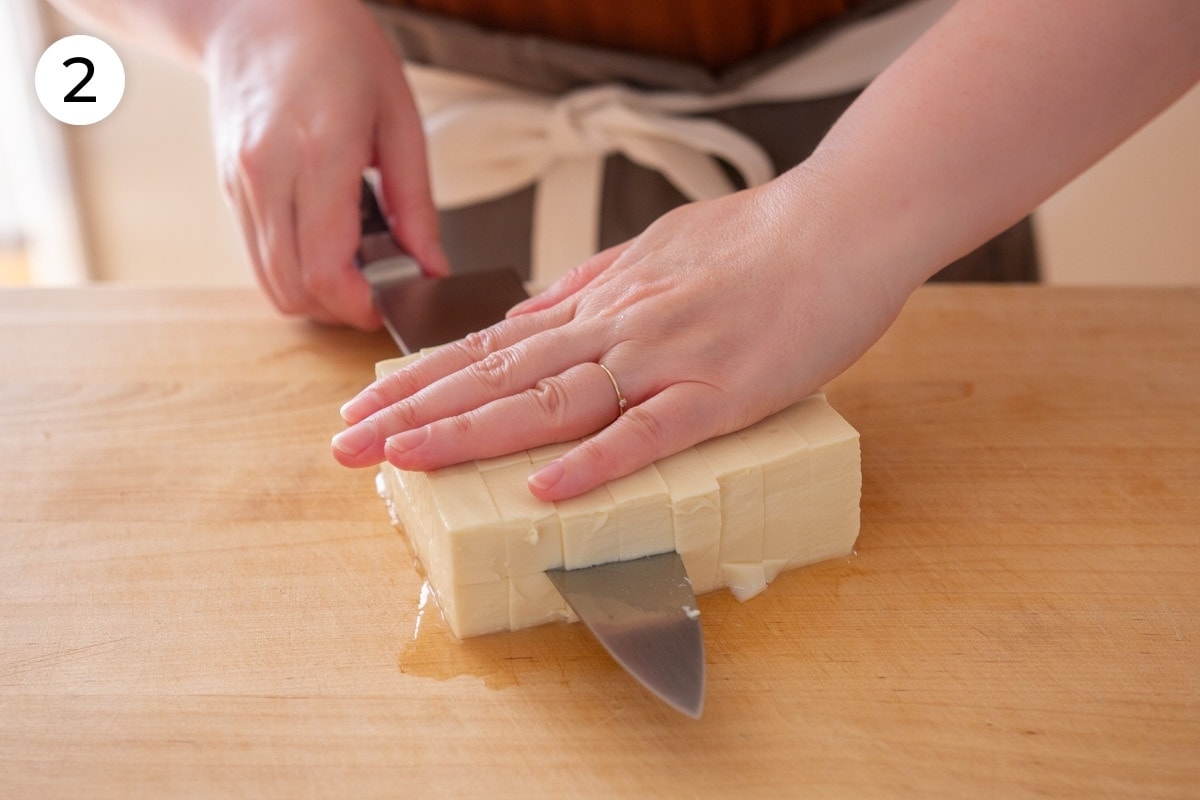
Cut the silken tofu into 1-inch (50-millimeter) cubes. I like to slice it in half first as shown above before cutting it into bite-sized cubes.
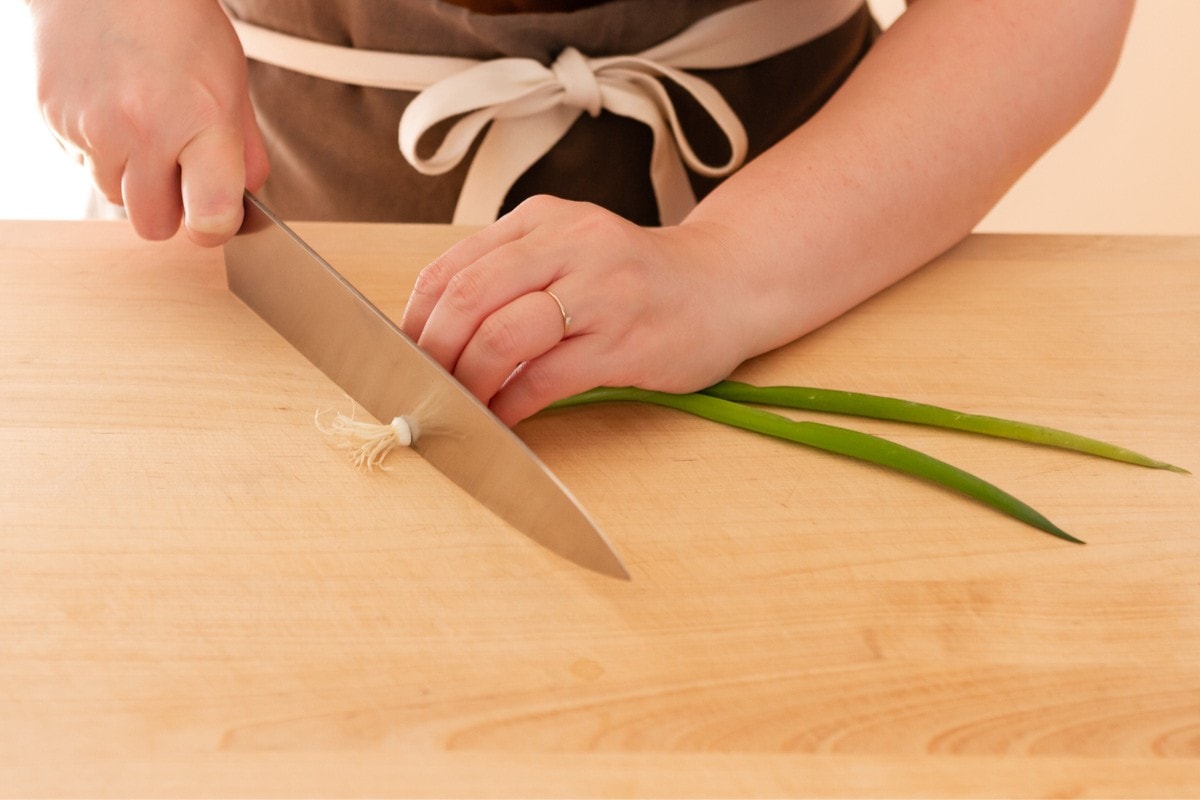
Cut the end off of 1 washed scallion.
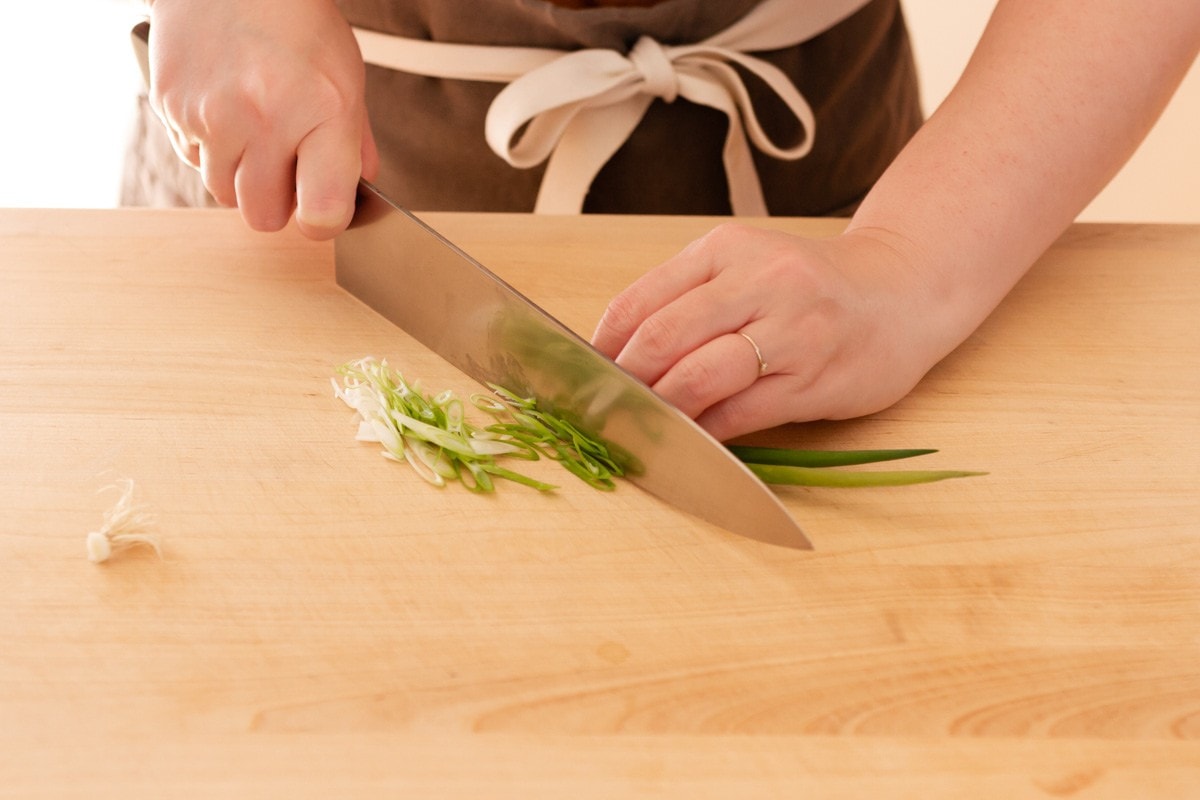
Thinly slice scallion on a bias (at an angle).
how to cut daikon (I'll also demo this during the session)
Here, I'll show you a special way to cut daikon that's not widely shared. It's the best way to cut it for soups!
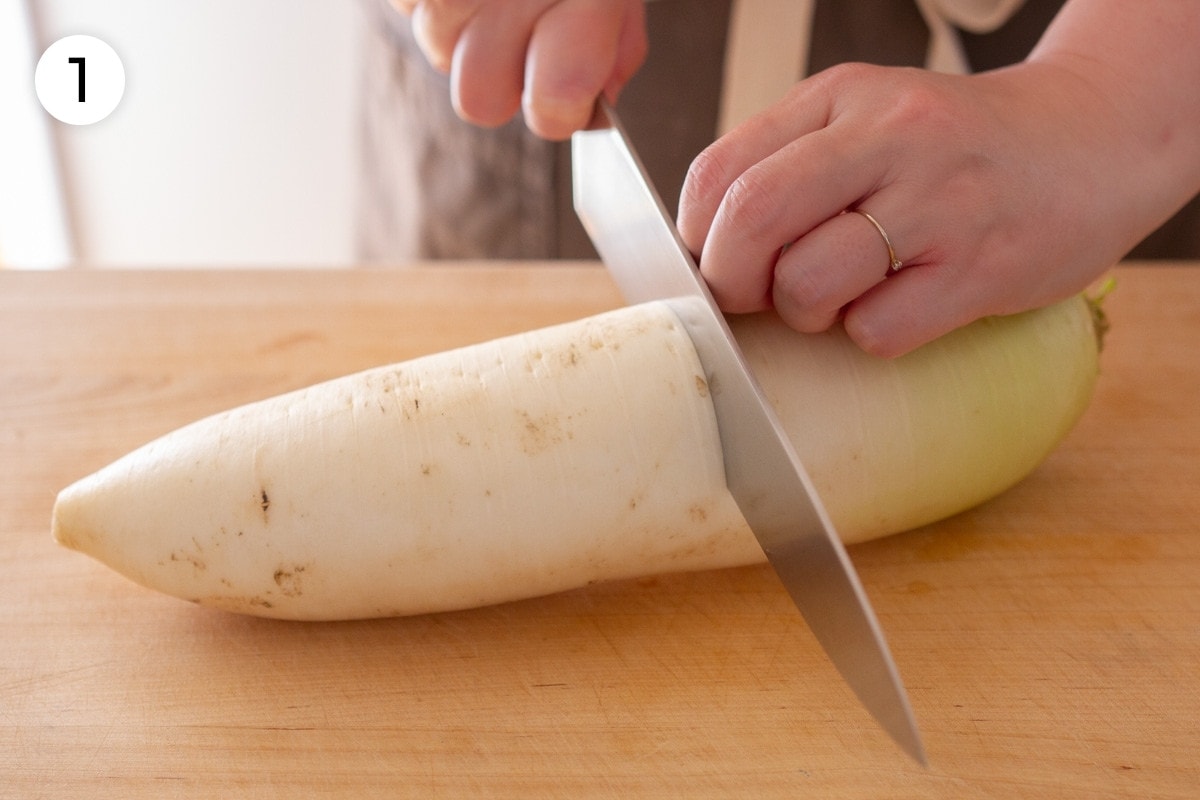
Cut off a 6-inch piece (about 150 millimeters) of washed daikon.
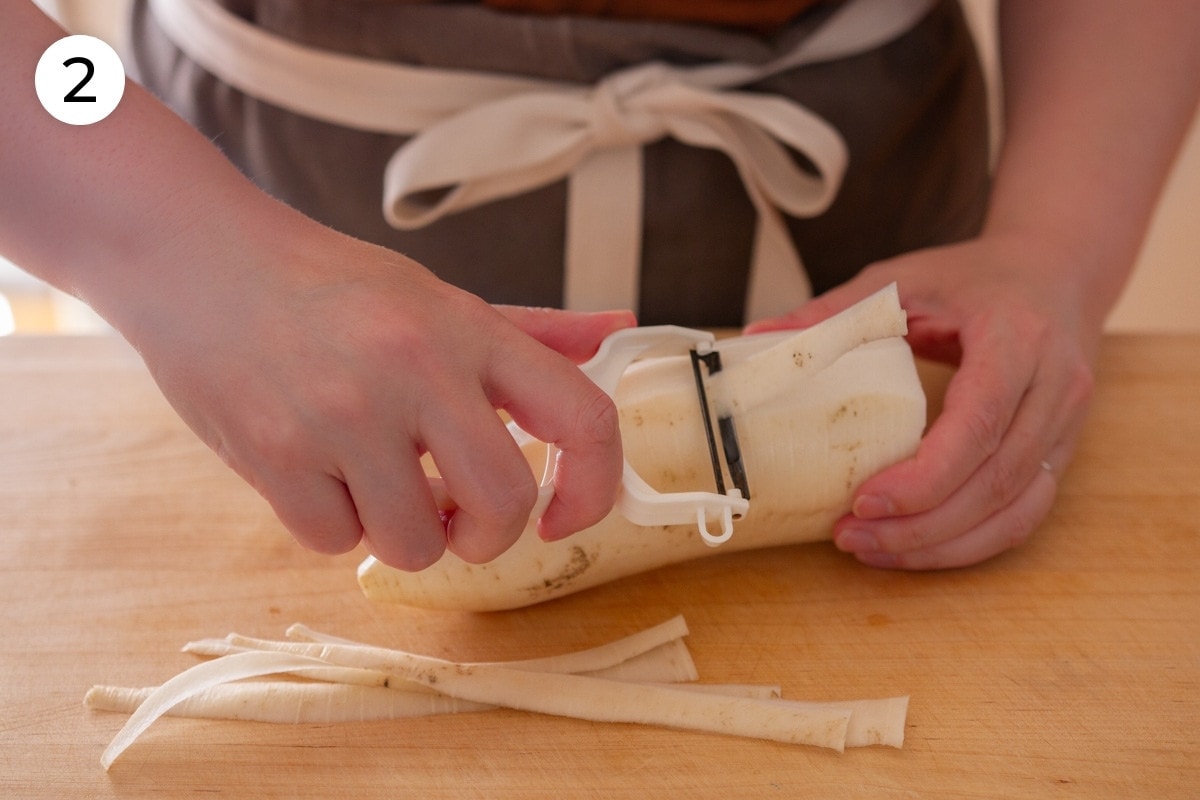
This way you're only peeling the part of the daikon that you'll use right away. The other half will stay fresh longer stored in the refrigerator.
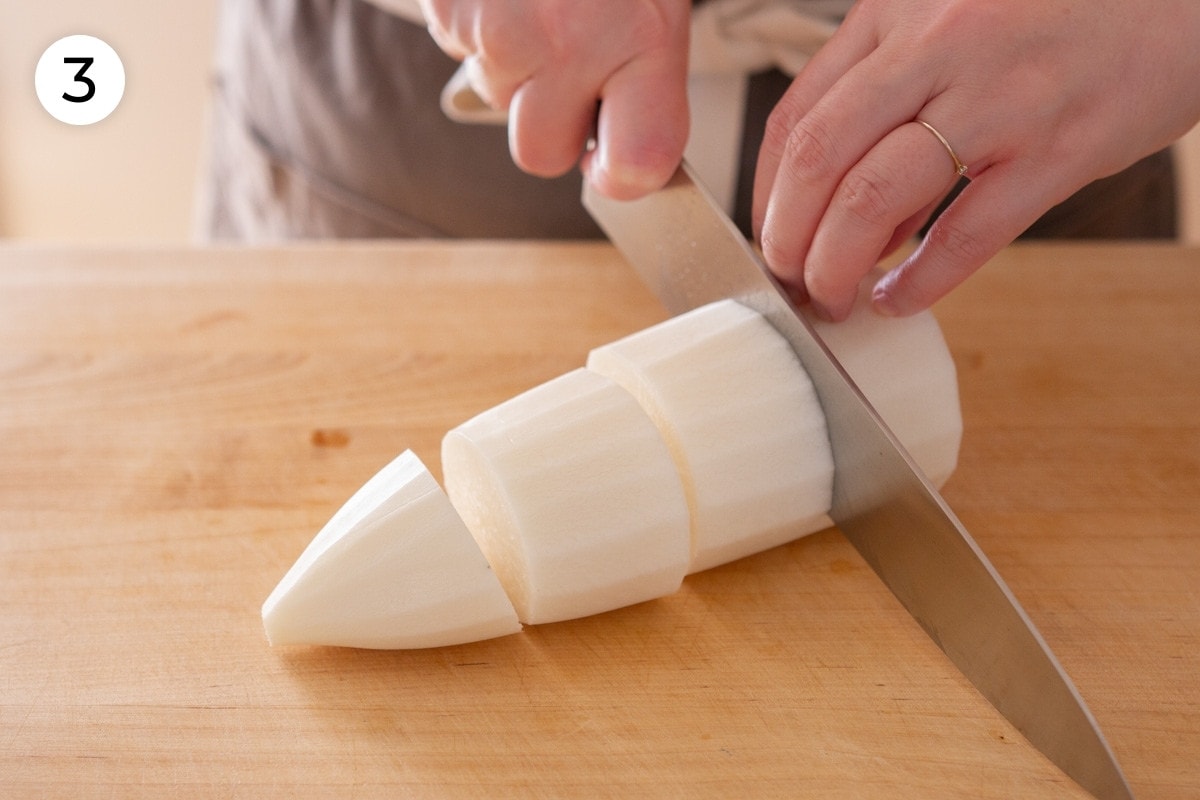
Cut the daikon into 2-inch long pieces (about 50 millimeters).
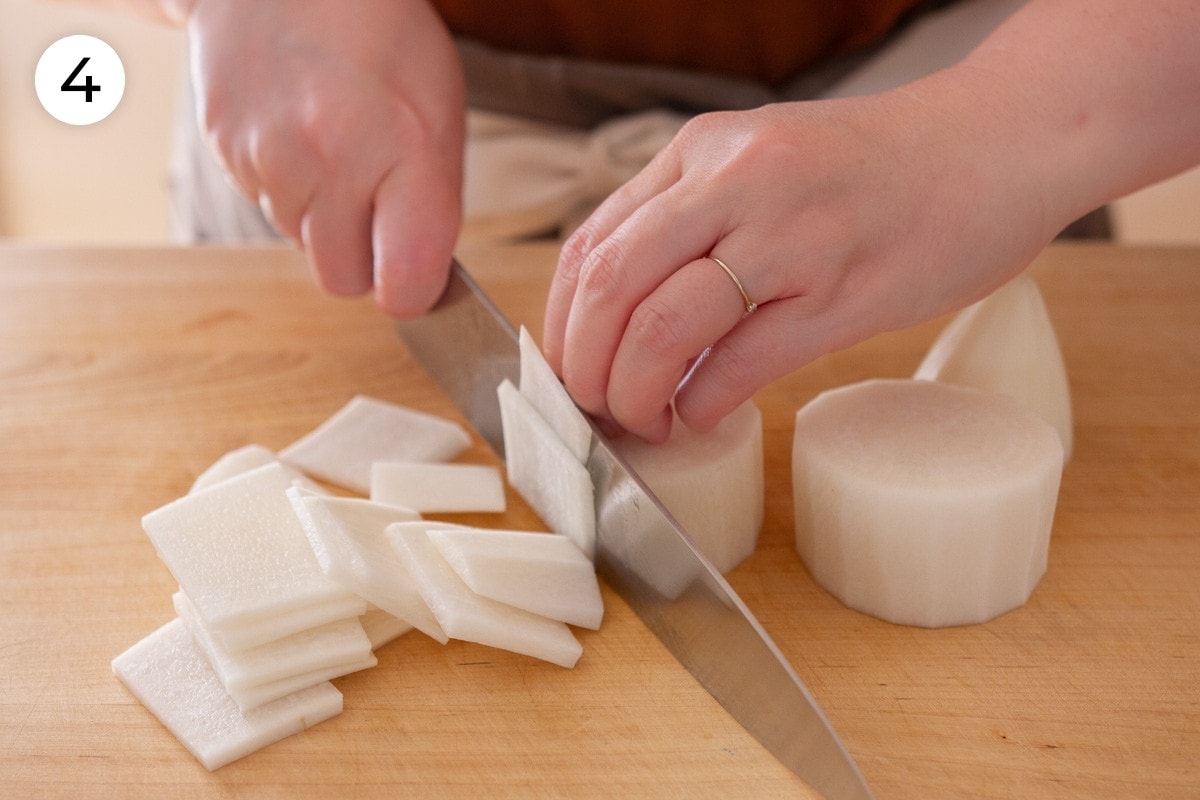
Place each disk flat side down and slice the daikon from the top down with the grain into ¼-inch (6-millimeter) thick slices.
pro tip: When using daikon in soups, cut slices with the grain rather than against the grain (as shown in the step-by-step photos above). This will give each slice a satisfying toothsome bite even after being fully cooked. That way you avoid soggy, too-soft, vegetables even when reheating a bowl of miso soup.
how to cut enoki mushrooms, if using (optional)
Enoki mushrooms are another favorite but optional ingredient. I love it in miso soup! If you can't find enoki, shimeji (beech mushrooms) or thinly sliced king trumpet mushrooms would work best as substitutes.
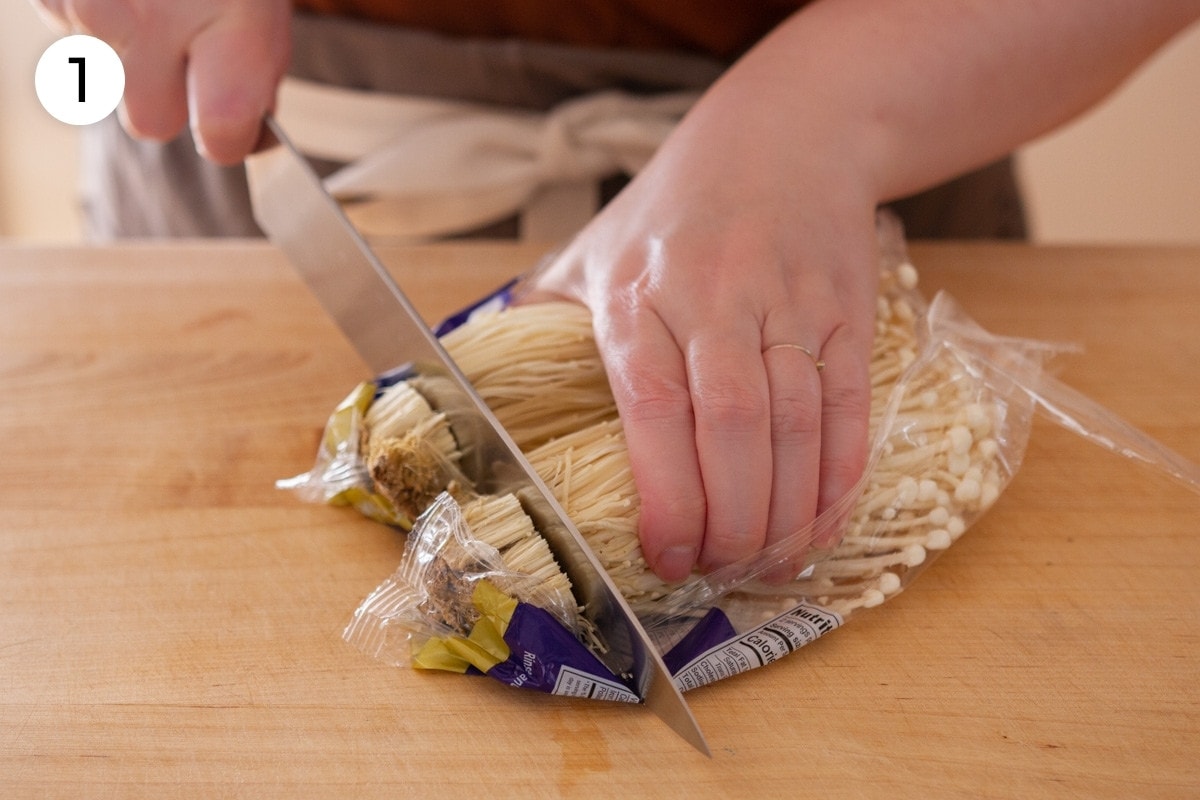
Cut the ends off of 1 package of enoki mushrooms (about 7 ounces or 200 grams). I like to cut the ends off while they're still in the package so the roots don't get everywhere.
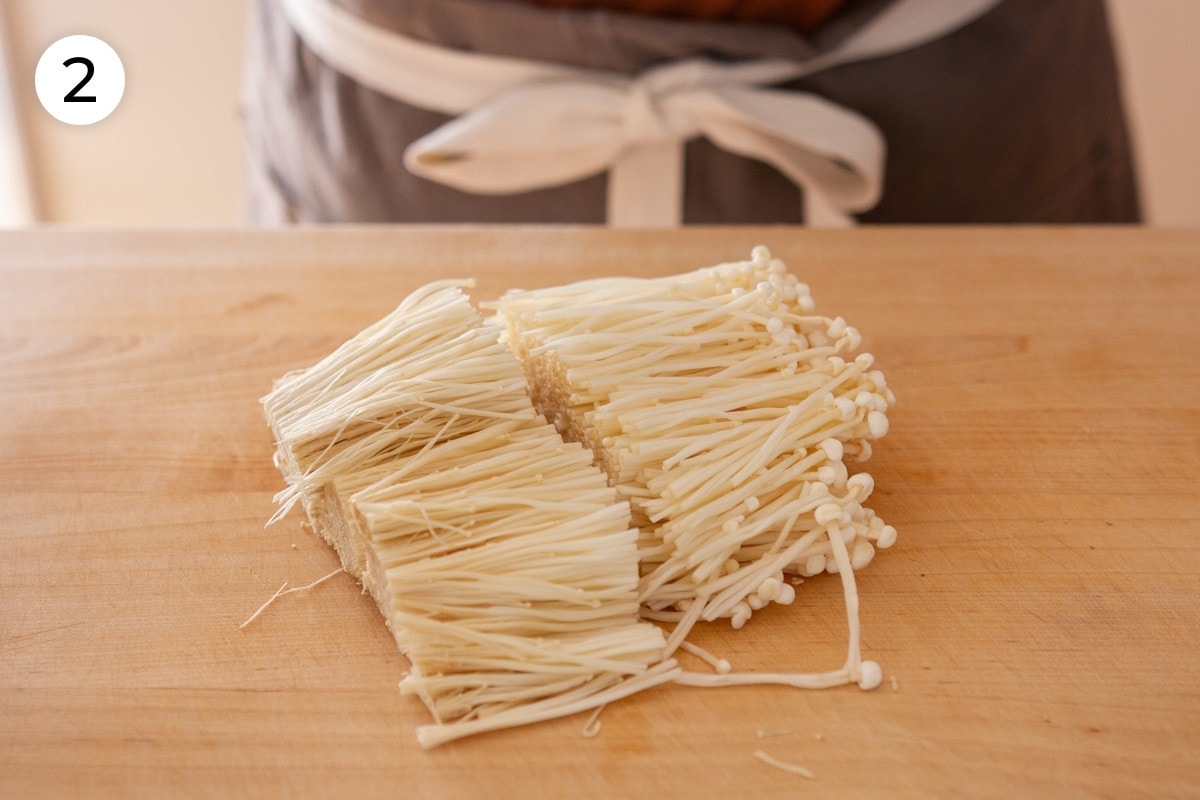
Cut them in half lengthwise.
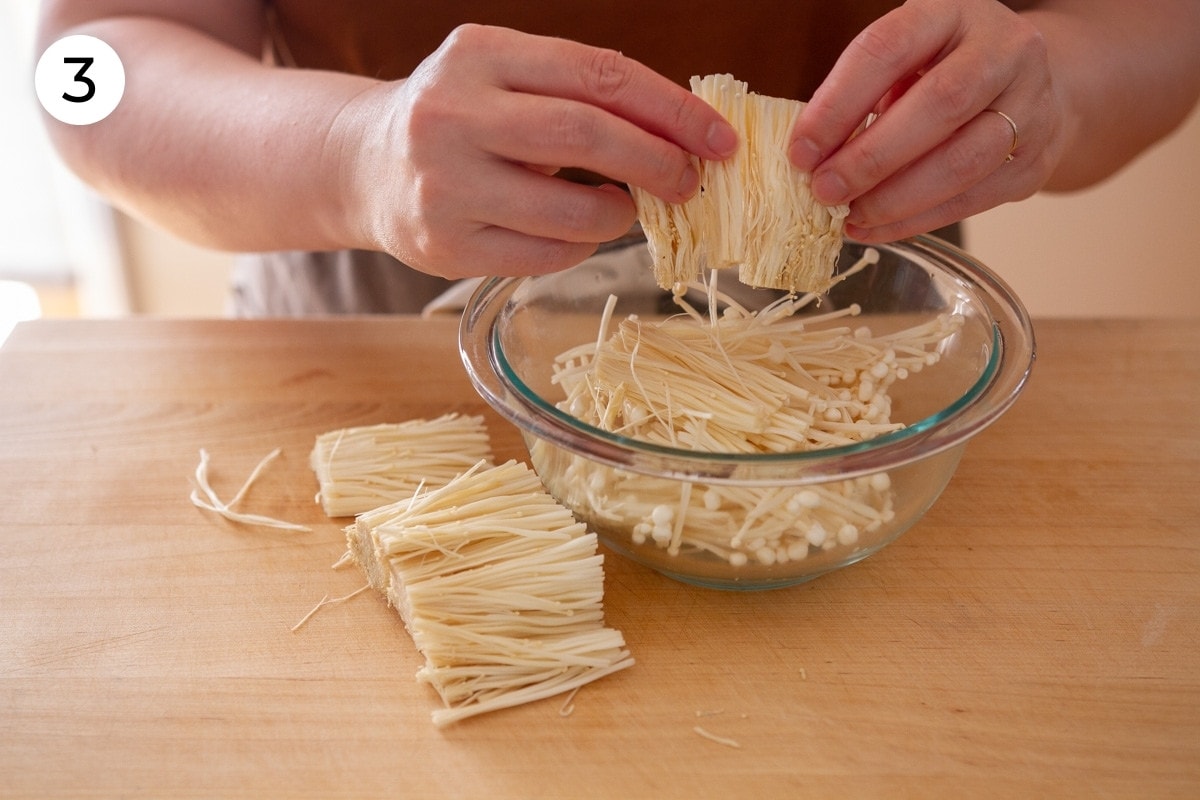
Separate the ends into smaller chunks.
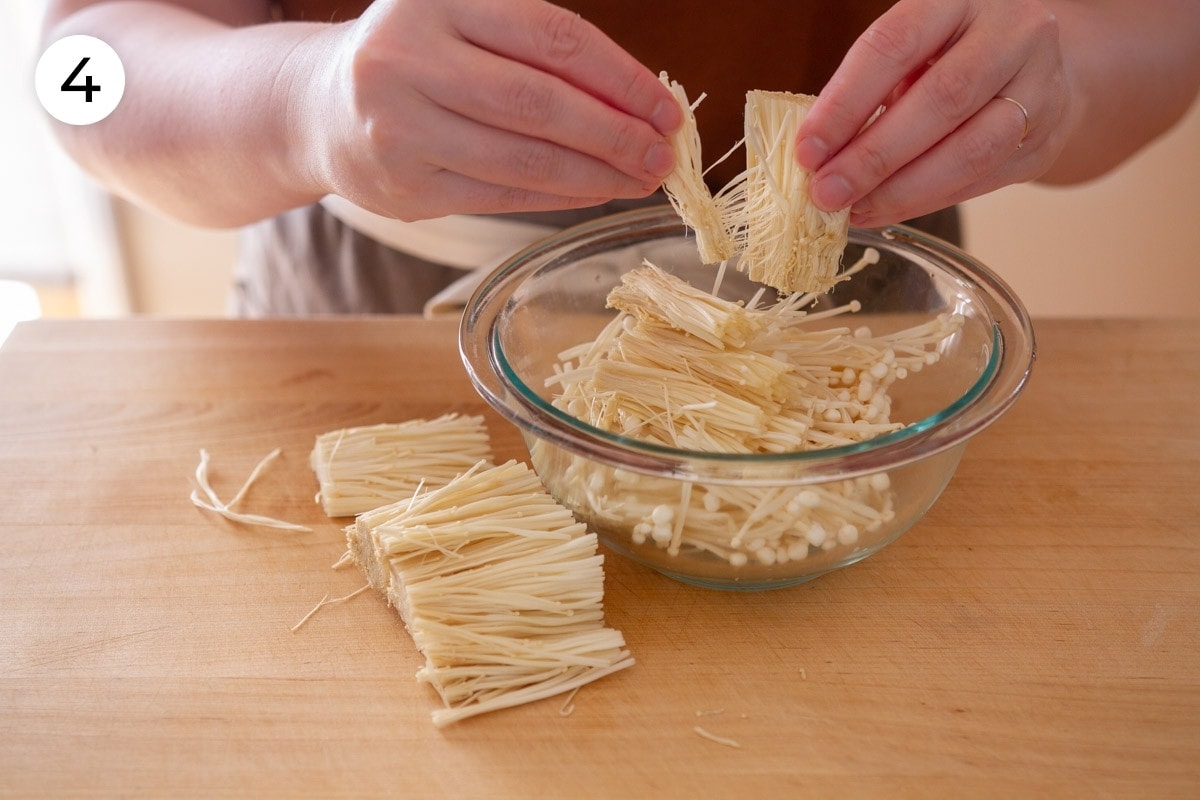
Using clean hands, pull small segments of the enoki ends apart so that they're in bite-sized chunks.
note: The link below is a paid affiliate link, which means we do make a small profit from your purchases (your price is not affected by this commission). We are a participant in the Amazon Services LLC Associates Program, an affiliate advertising program designed to provide a means for us to earn fees by linking to Amazon.com and affiliated sites. If you click on an affiliate link, you consent to a cookie being placed on your browser for purposes of tracking commissions.
equipment note: Have a small fine mesh strainer (paid link) ready to help dissolve the miso paste when cooking.
stir-fried Taiwanese cabbage
chhá ko-lê-chhài (炒高麗菜)
🥬 key ingredient - what to look for when buying Taiwanese cabbage
Taiwanese cabbage 高麗菜 (ko-lê-chhài in Taiwanese, or gāolí cài in Mandarin, Chinese) is a delicious, and often under-used, variety of cabbage. It's known as "flat cabbage" since it has a flat and oblong shape and is sometimes mistakenly referred to as Chinese cabbage.
It has loosely packed leaves that are crisp and tender with a sweet flavor that lacks the bitterness often found in other cabbage. It can be enjoyed raw or cooked, and thankfully, it's in season year-round!
You can find this cabbage in well-stocked Taiwanese or Chinese grocery stores like 99 Ranch Market, usually displayed in the refrigerated produce area. I've also seen it at local farmers markets and online at Weee! (affiliate link).
The figure below shows key things to look for when picking out Taiwanese cabbage.
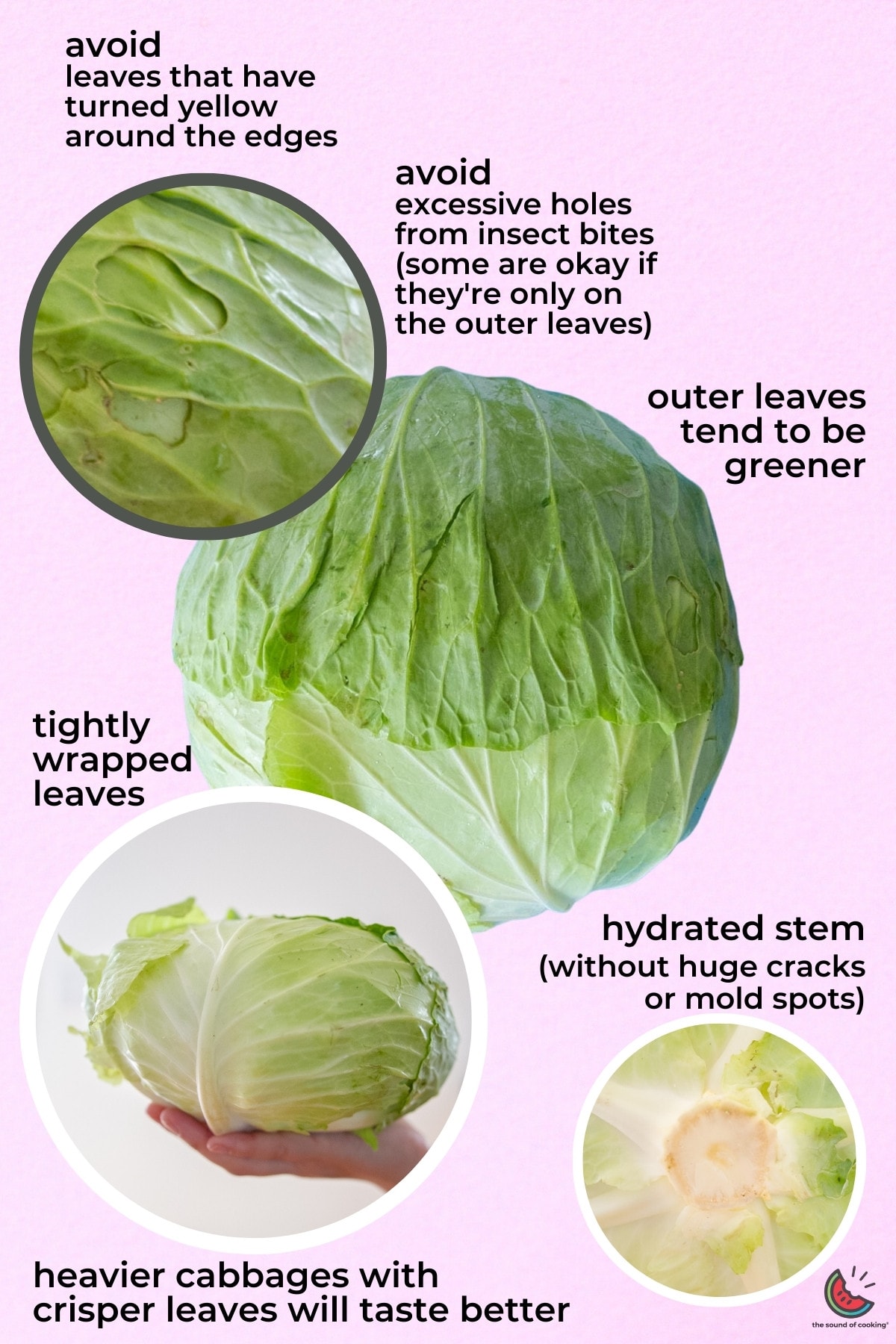
- Feel the weight - heavier cabbages will taste better.
- Check the leaves - look for crispy outer leaves that are green and tightly wrapped.
- Avoid - leaves that have turned yellow along the edges, or have a bunch of holes from insect bites all the way through (it's okay if there are just a few on the outer leaves).
- Look for - a hydrated stem without cracks or mold spots.
🔪 advance prep instructions
Complete steps 1-4 in advance:
Begin by rehydrating your sliced shiitake mushrooms.
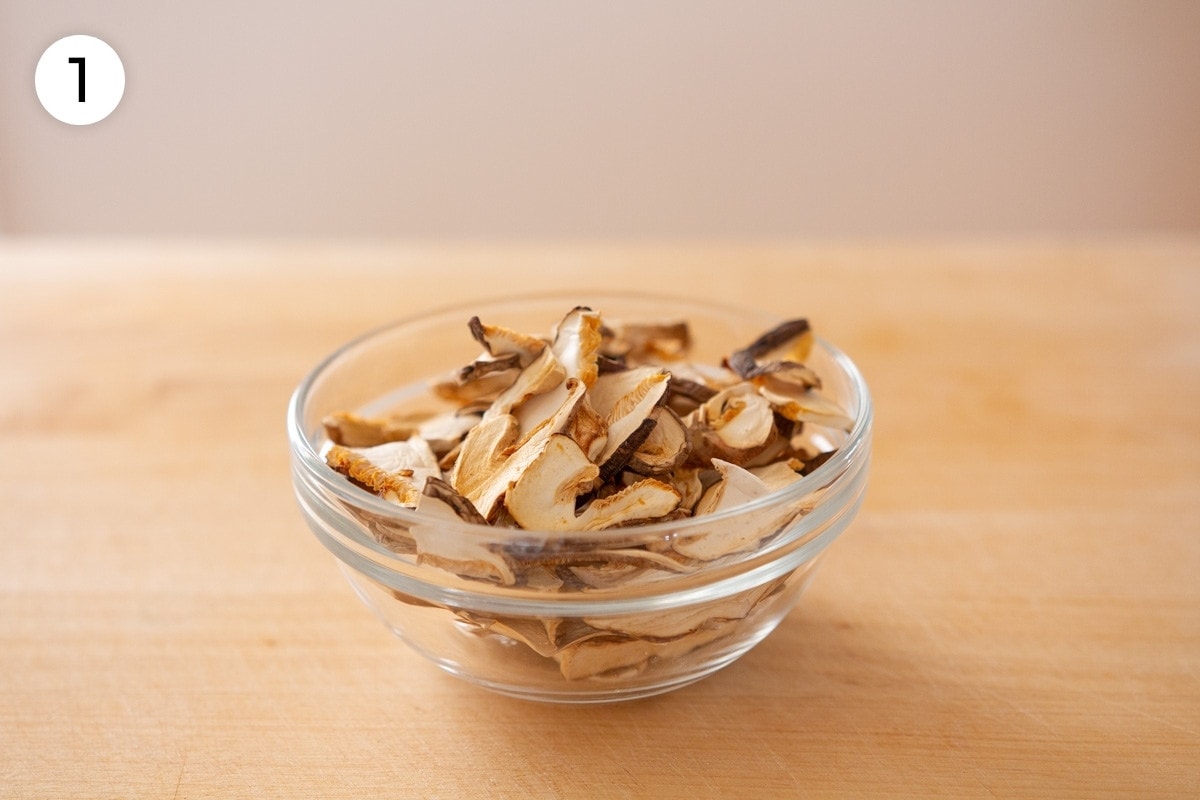
Place the dried shiitake mushrooms in a small bowl.
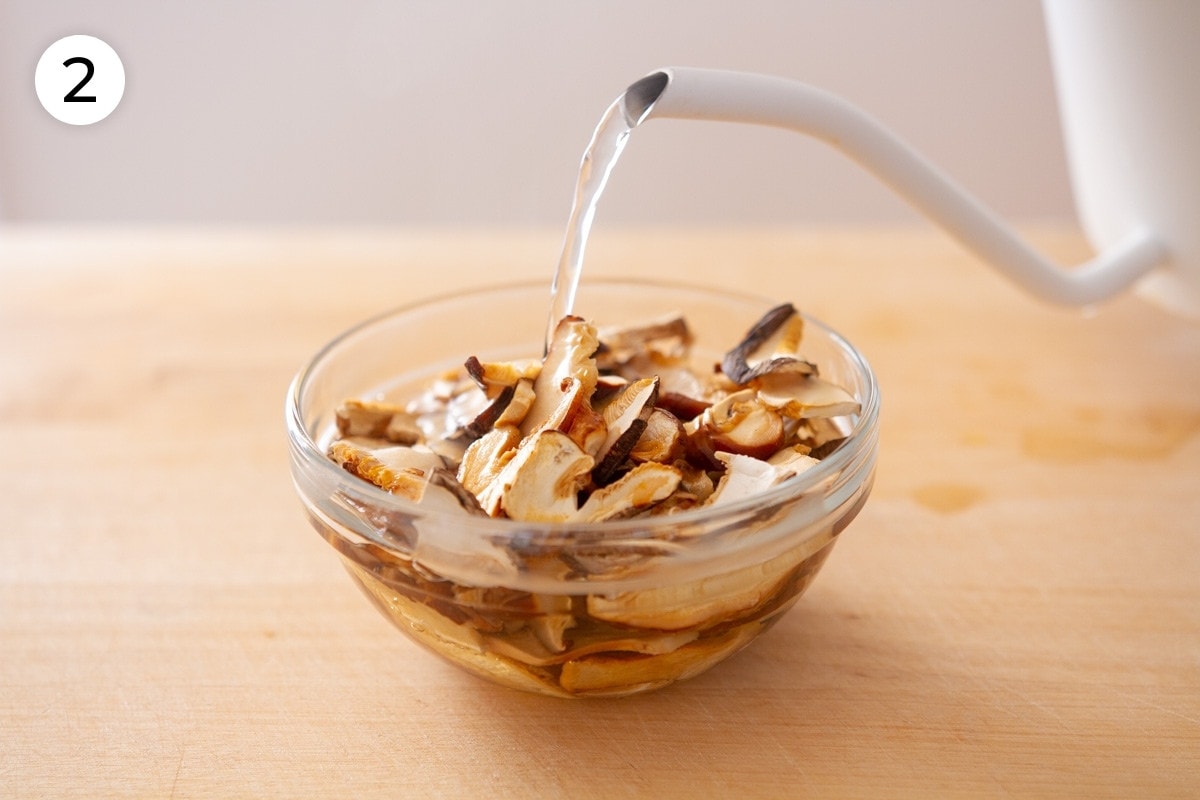
Soak your dried mushrooms in 2 cups of just boiled water.
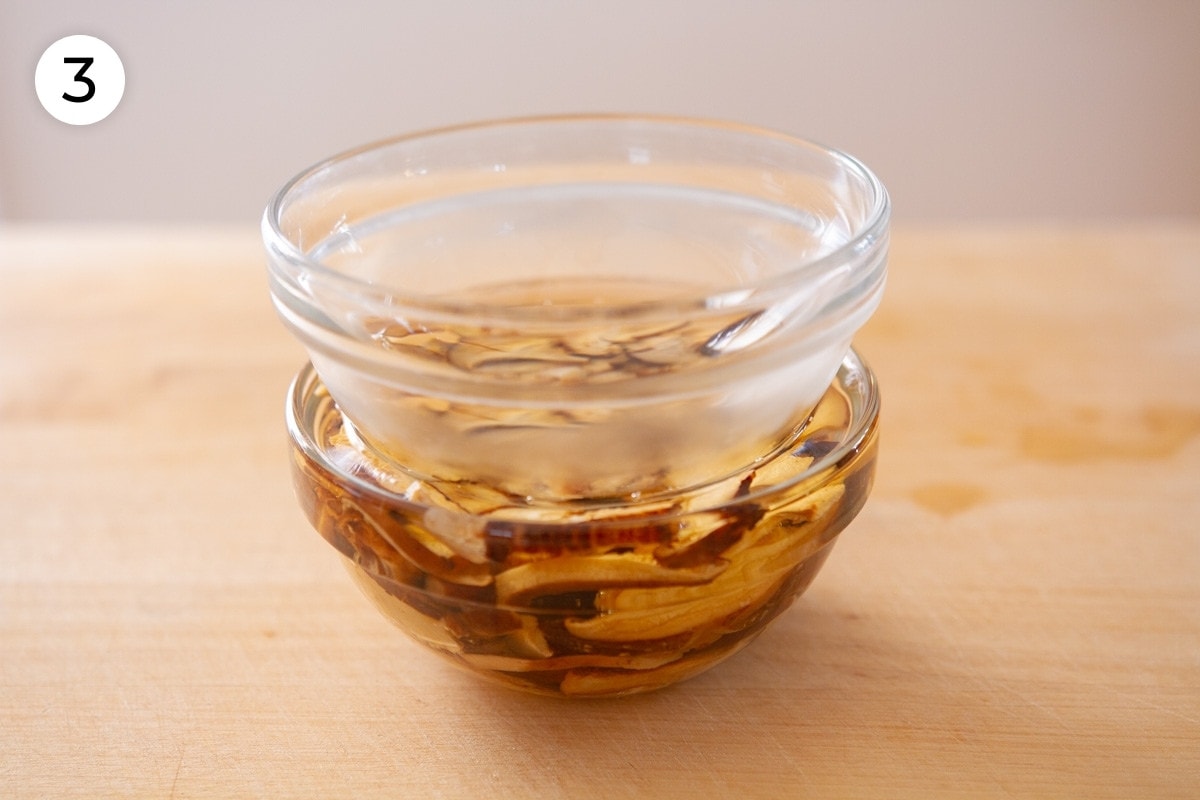
Place a smaller bowl on top to keep the mushrooms fully submerged. Soak for at least 20 minutes.
Once the mushrooms are reconstituted, squeeze out the liquid into the same bowl, reserving the liquid to use later.
4. velvet the pork loin strips, if using (optional)
In a medium bowl, add the pork loin strips, salt, ground white pepper, water, cornstarch, and canola oil.
Stir until the pork is well coated with the cornstarch and sauce.
🧂 Measure out the remaining seasonings and sauces listed in the recipe.
🍚 Make some white rice or grain of choice for a complete meal.
🍜 more taiwanese recipes
Looking for Taiwanese recipes? Try these:
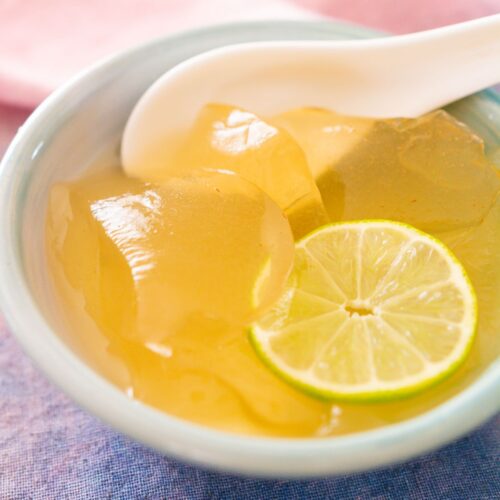
- easy aiyu jelly 愛玉: Taiwanese dessert and bubble tea topping
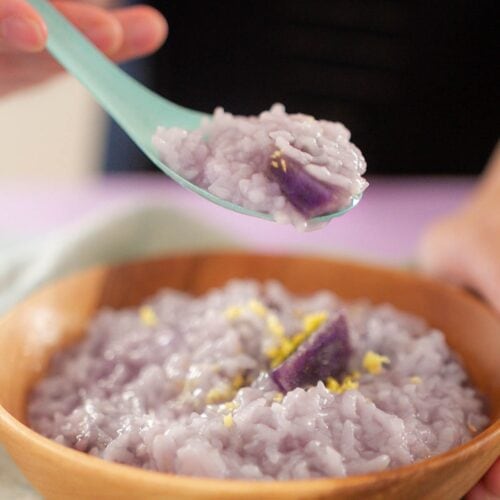
- sweet potato congee: how to make rice porridge
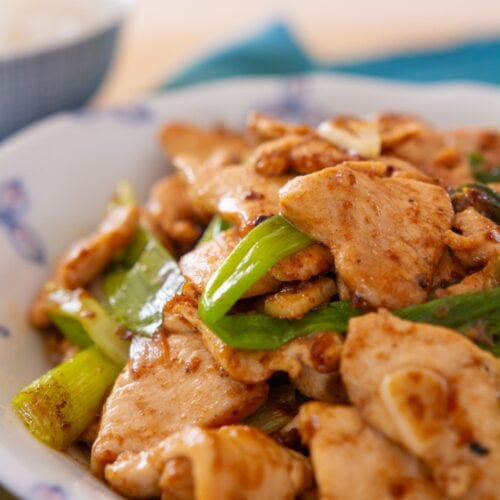
- sha cha chicken
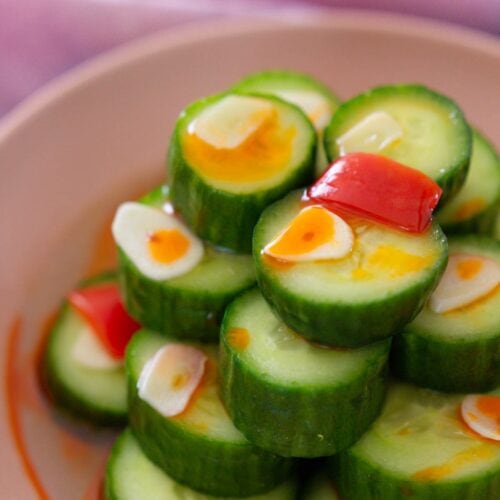
- Din Tai Fung cucumber salad recipe
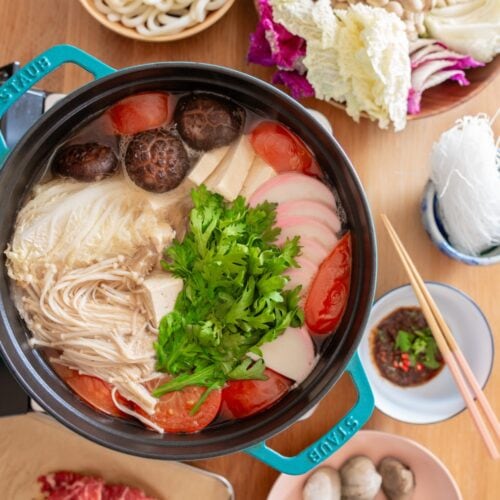
- Taiwanese hot pot: the ultimate guide (step-by-step)
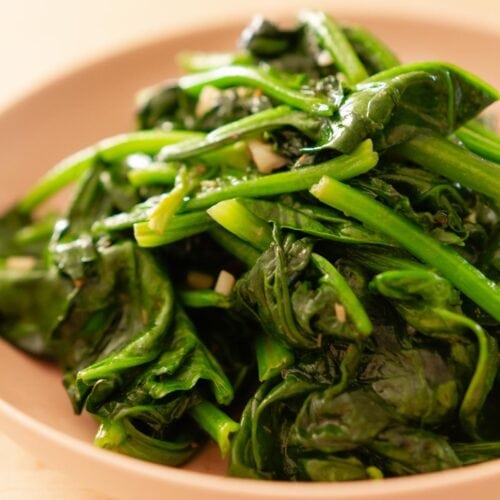
- stir-fry spinach with garlic (+ Taiwan spinach and a flavor booster)
- taro boba milk tea 芋頭奶茶 (Taiwanese taro bubble tea)
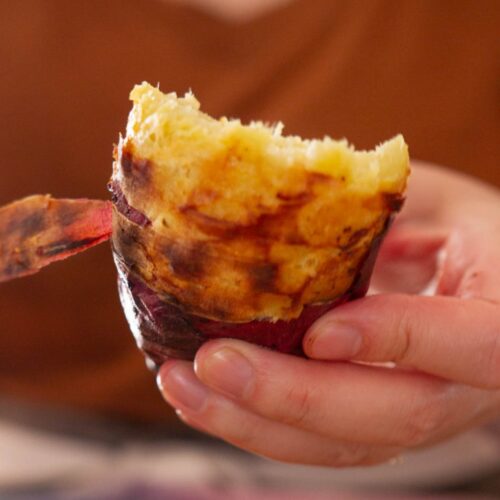
- japanese sweet potato air fryer (murasaki)

Let me know if you have any questions in the comments below.
Happy cooking! ~ Cindy Chou, RDN 周昀
Want to get recipe updates, pro cooking tips, and nutrition info on East Asian ingredients straight to your inbox? Sign up here for a free PDF with cozy soup recipes.
Comments
No Comments